
Start with 80% done — AI CRM/ERP Framework for Developers
AI-Engineering Foundation Framework built with AI and designed for AI. Hundreds of architectural and domain decisions (multi-tenancy, RBAC, event flow, pricing, sales pipeline, CRM/ERP processes) are already encoded as conventions and specs.
For Developers
For Enterprise Clients
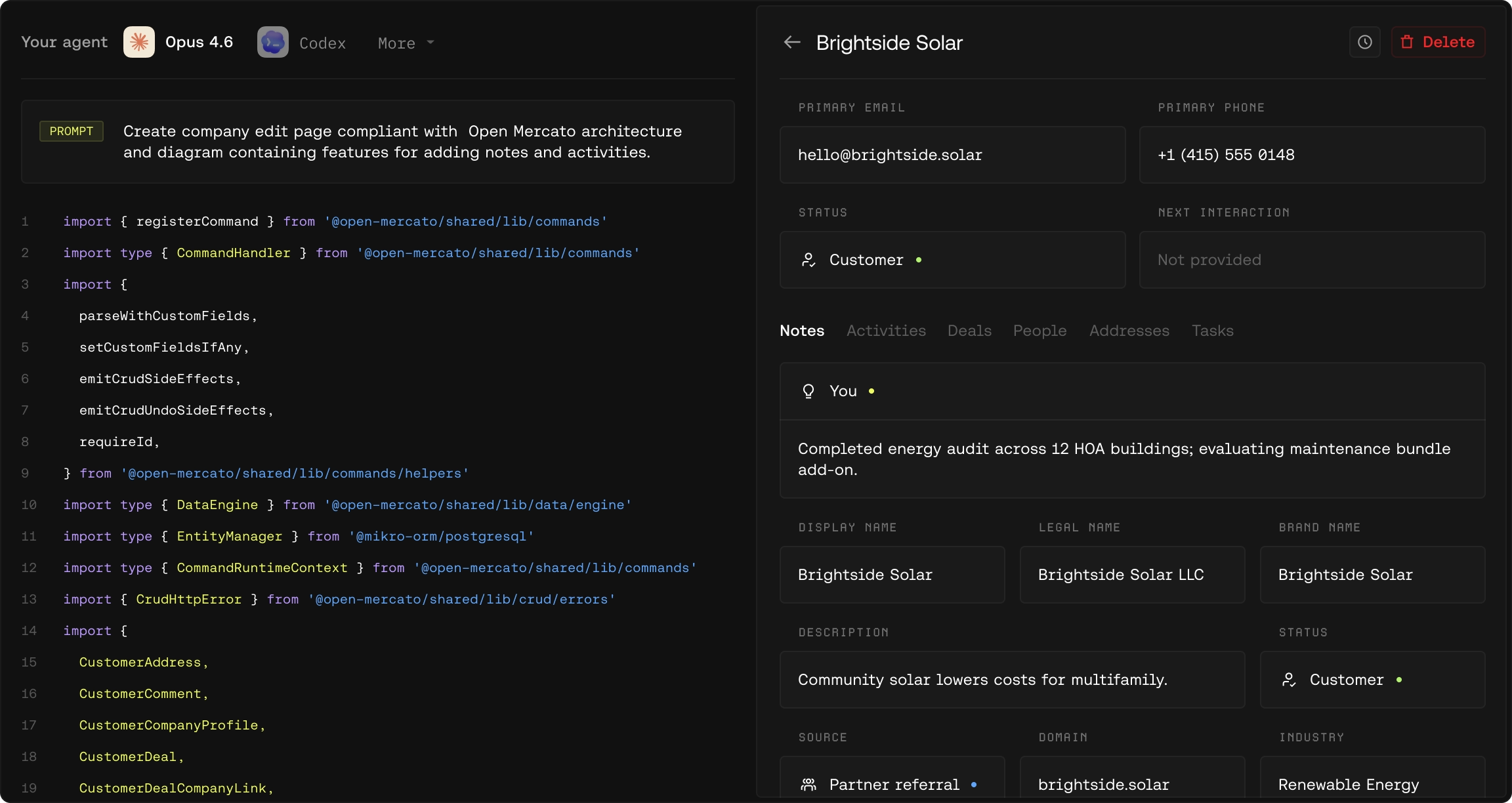
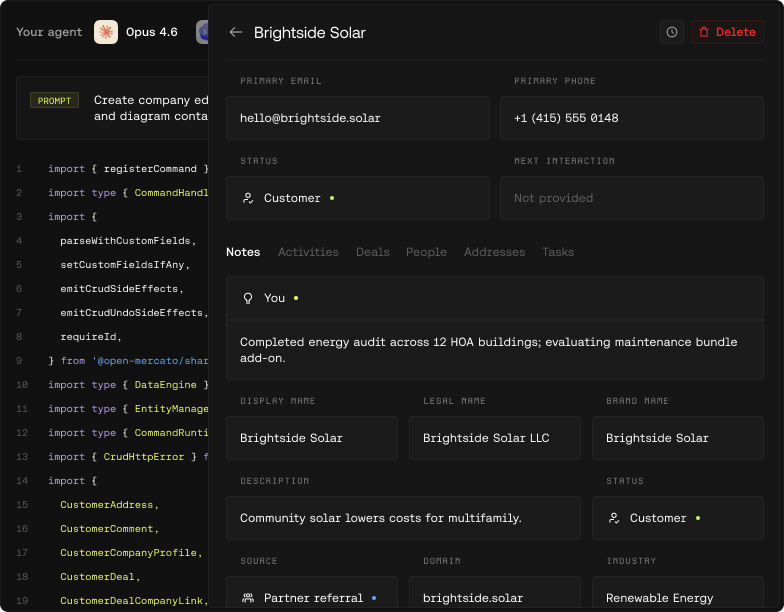
Try in Cloud Sandbox
AI-Engineering Foundation Framework.
Security & Infrastructure
Business Logic
Performance & AI
Modify nothing. Extend everything.
Core is a light dependency.
A versioned npm package you install, never fork. Overlays replace behavior at build time so you can always update without fear.
Extend everything.
Overrides live in your layer, not the core. Replace modules and workflows safely. The foundation stays intact.
Your agents write code.
Specs ship with the repo from day one. Agents write architecture-aware code. Changes stay consistent and safe.
Meet people behind Open Mercato

Tomasz Karwatka
Co-founder of Divante and Callstack, both scaled to enterprise clients across Europe and the US and exited. Investor at Catch The Tornado, now all-in on Open Mercato.

Piotr Karwatka
Creator of Vue Storefront and co-founder of Alokai (Y Combinator, $40M Series A). Now focused on AI-native business software.

Patryk Lewczuk
Core Developer and Forward Deployed Engineer, earlier Development Lead and Solution Architect building B2B e-commerce systems. At Open Mercato responsible for Cezar, Agent Orchestrator and customer success.

Maciej Gren
Building and growing the Open Mercato Partner Network — connecting software agencies, freelancers, and strategic partners with the framework. Together with Patryk, responsible for customer success.

Who’s using this?
Enterprise teams
Launch new products without the 6-month infrastructure tax.
Software houses
Sell reusable solutions, not developer hours.
Teams leaving low-code
Keep the speed, own the code.