Careers
Open roles at Open Mercato — join the team building the AI-native foundation for business software.
Practical guides, deep dives, and lessons learned from building production-ready AI systems.
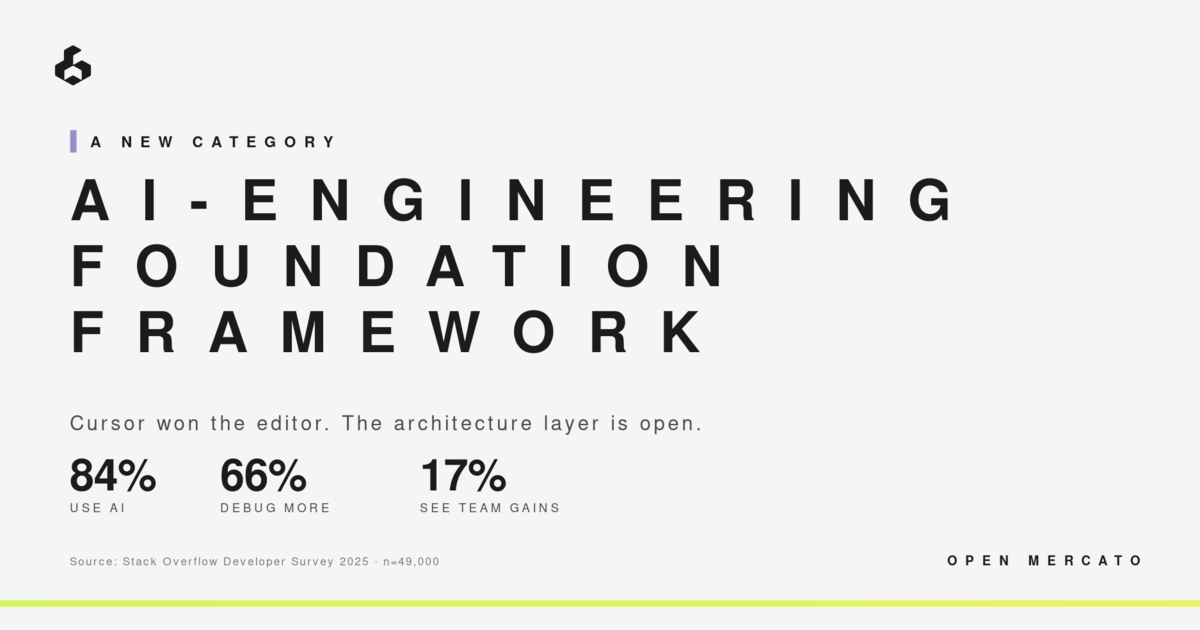
84% of developers use AI. 66% spend more time debugging it. The fix isn't a better model - it's a better foundation. Welcome to a new category: AI-Engineering Foundation Framework.
A full AI engineering environment in your browser: Codex, Claude, VS Code, Git, any stack. Billed per minute. Running in under 30 seconds. Sandboxes just replaced our official demo.
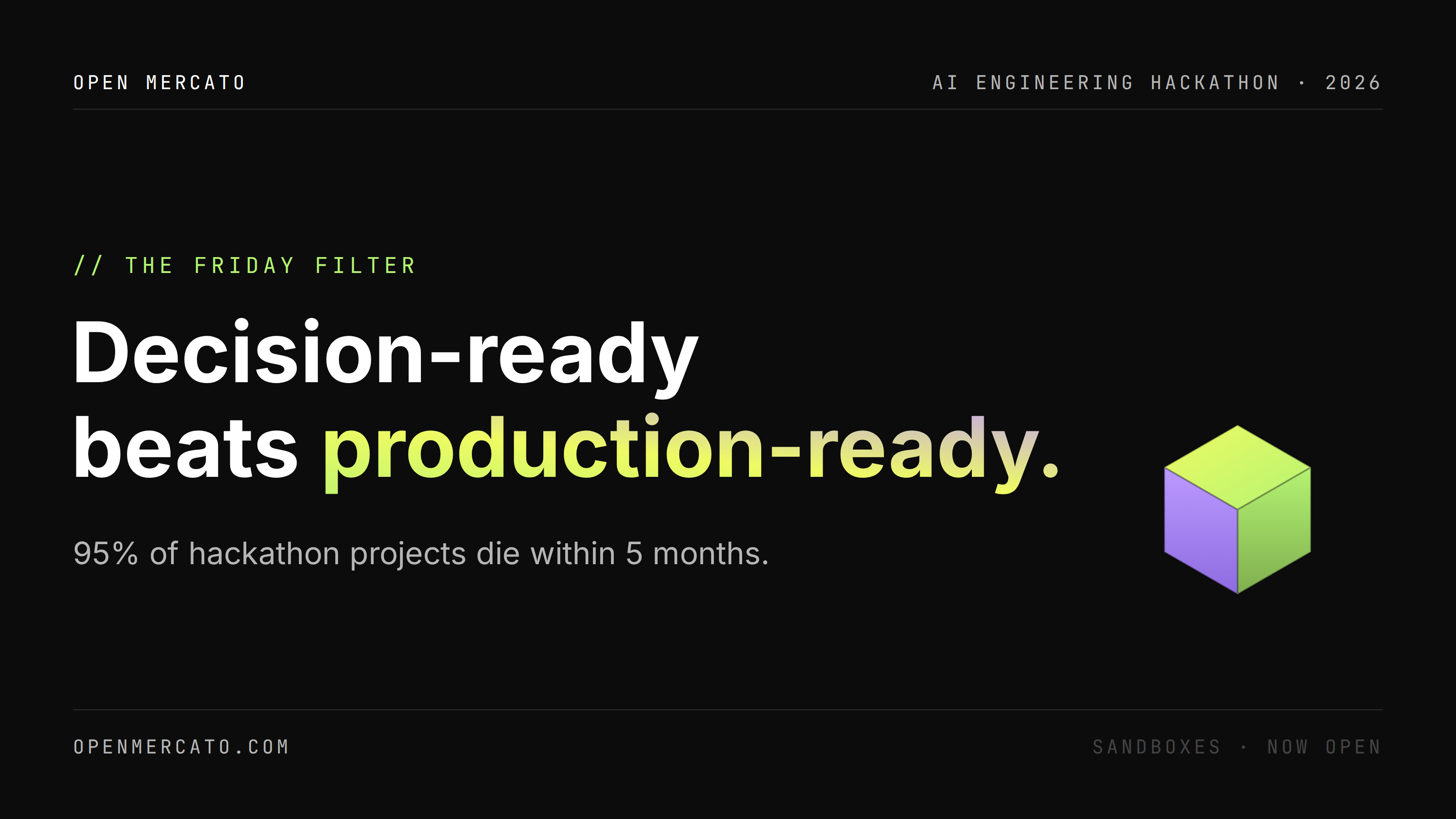
95% of hackathon projects are dead within five months. The weekend is not where you lose them. Friday is. A four-question filter for decision-ready AI projects, plus where Sandboxes come in.
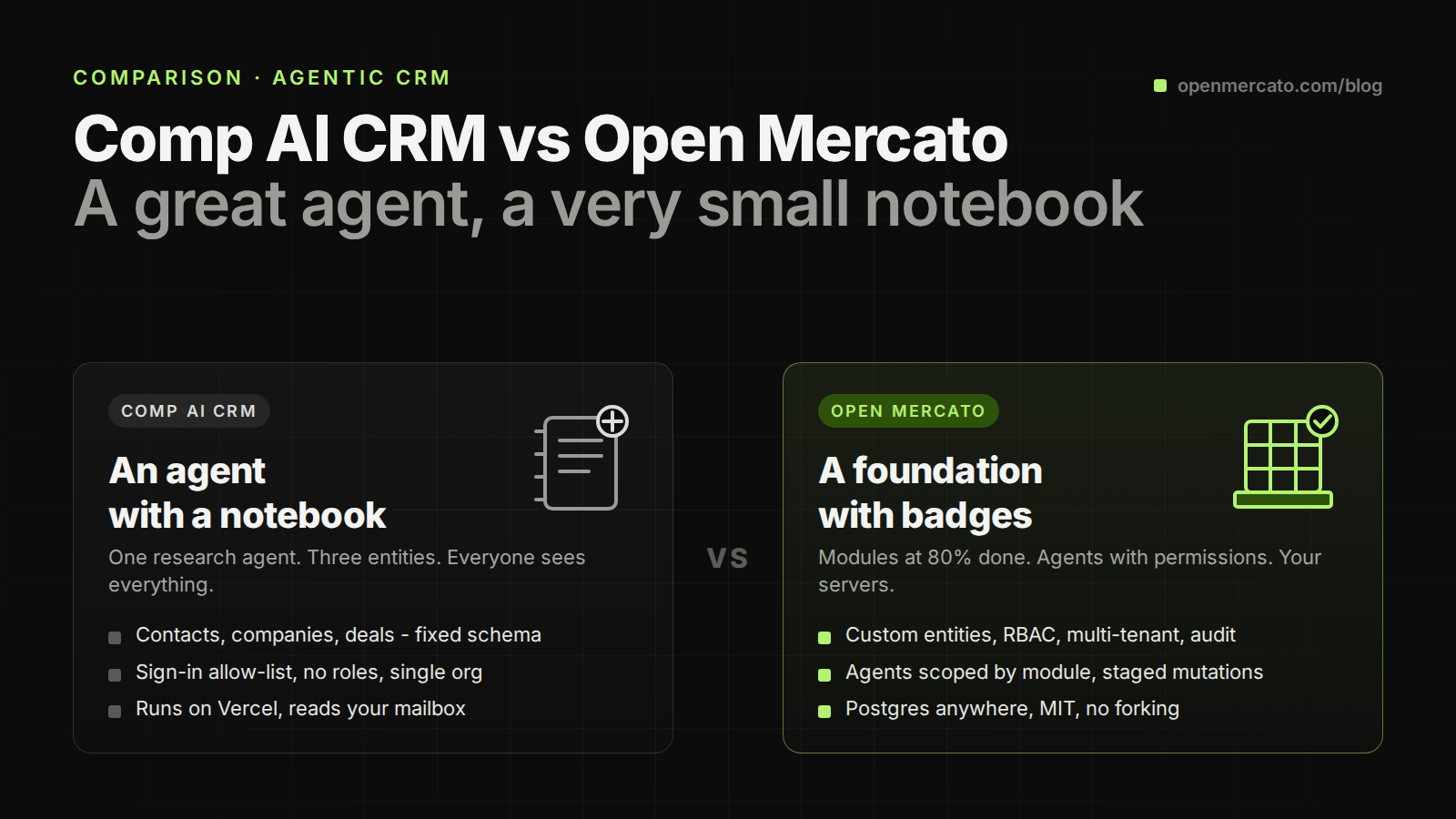
Comp AI shipped an "agentic-first" CRM: the agent works, the CRM is where it keeps its notes. I read the whole repo. It is good. Here is what it gets right, where it stops, and when you need a foundation instead.
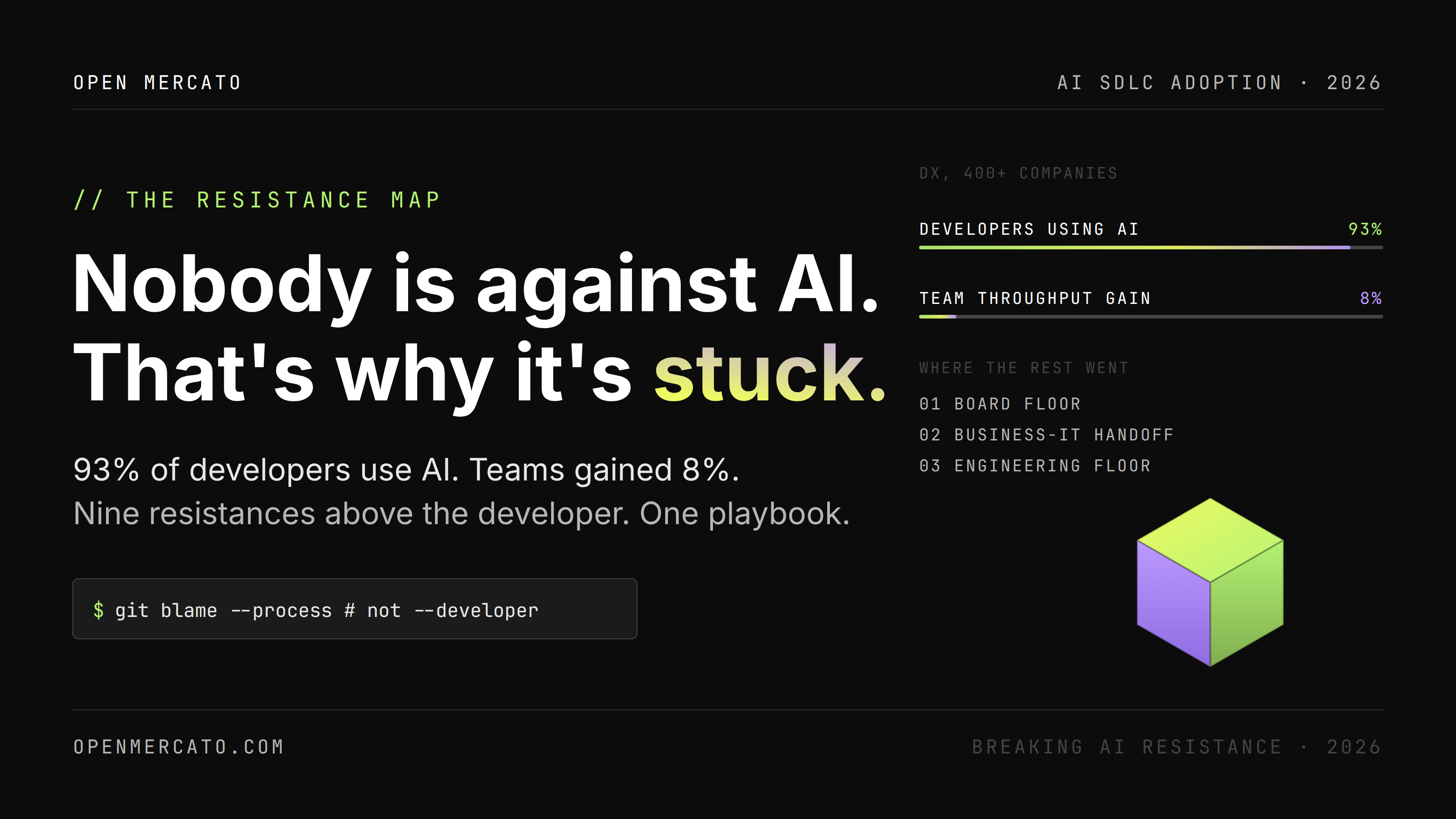
Your developers already use AI every day. Your company got 8%. Nine anonymised resistances that stall AI SDLC and AI engineering adoption in large organisations, and the playbook that actually moved things.
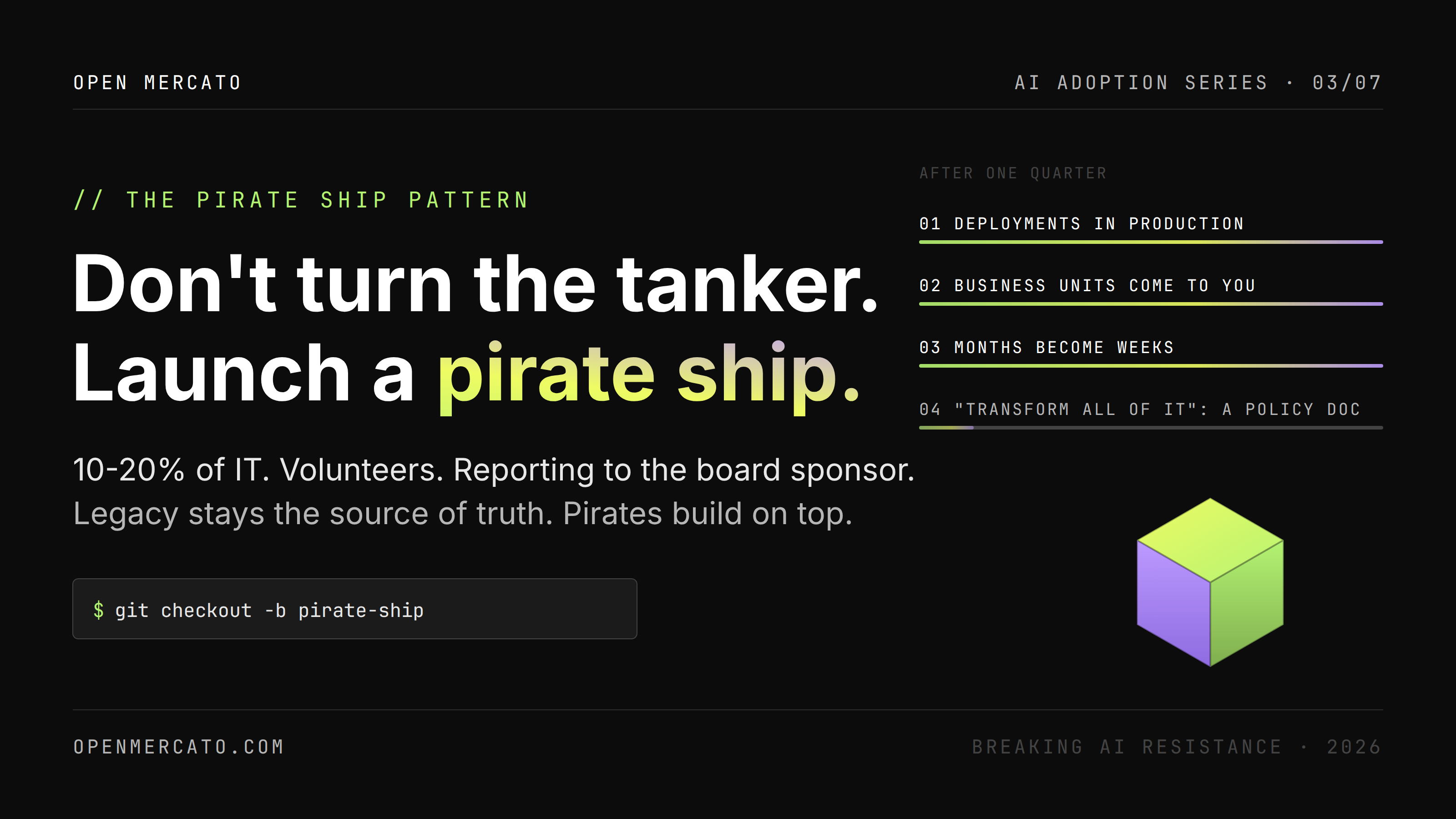
The board is with you and the wave is right. Now: how do you put AI into a real organisation with 400 people in IT? Carve out 10-20% as a pirate ship, keep legacy as the source of truth, and judge it by what is in production after one quarter.
Self-hosted, per project, unlimited seats. Stop paying and the last version stays yours. How the Open Mercato Enterprise license works and why it does not hold you hostage.
Not one line of Open Mercato was written by a human. The process behind a million-line ERP: one monorepo, AGENTS.md as a task router, specs before code, and the open-sourced Skills and Cezar tooling.
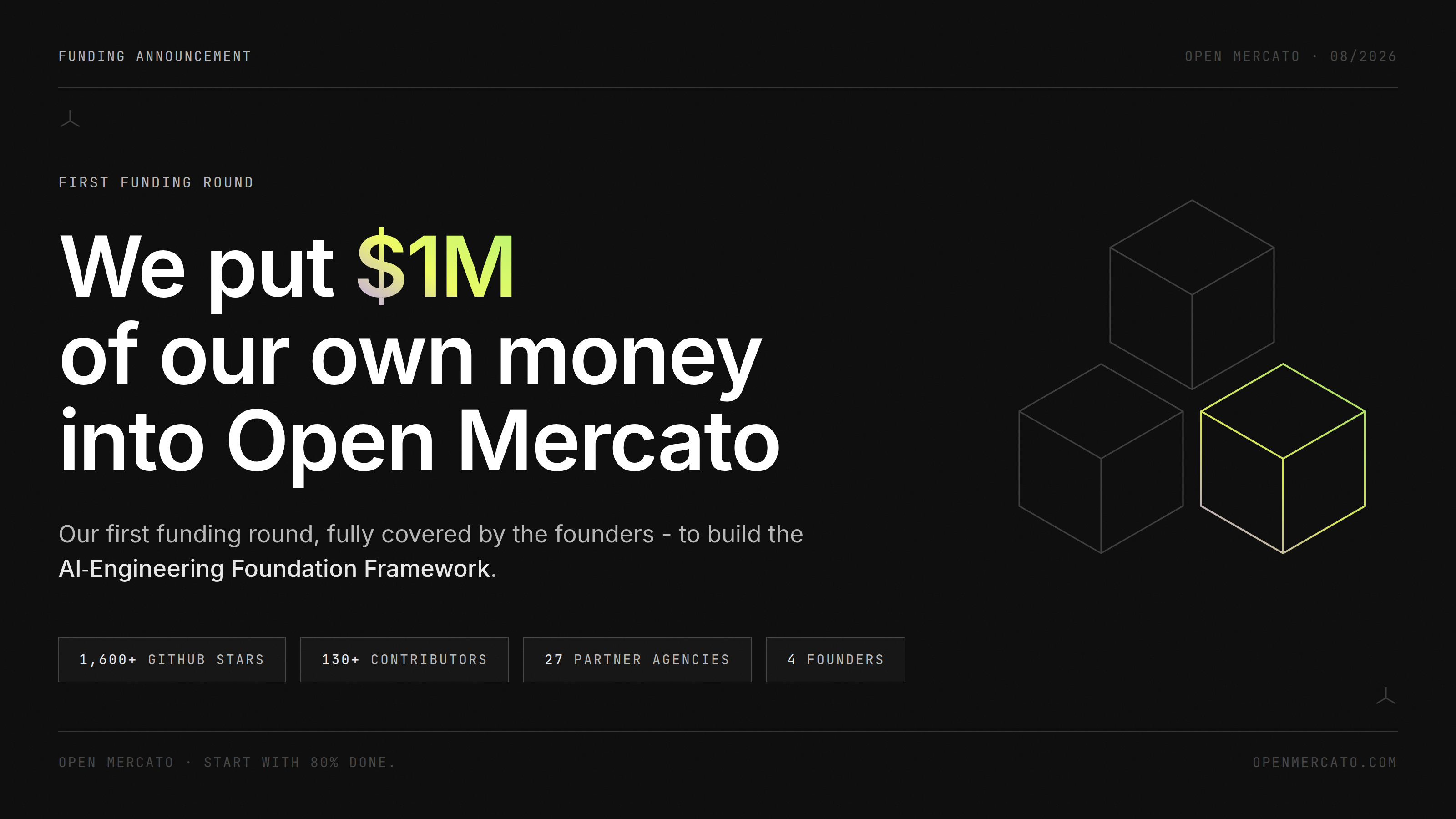
Open Mercato closes its first funding round: $1M invested by the founders. Here is why we bet our own money on AI-Engineering.
A complete Warehouse Management System module is now part of Open Mercato open source, contributed by Filanovum: multi-warehouse locations, lots with FEFO, cycle counts and a full movement ledger.
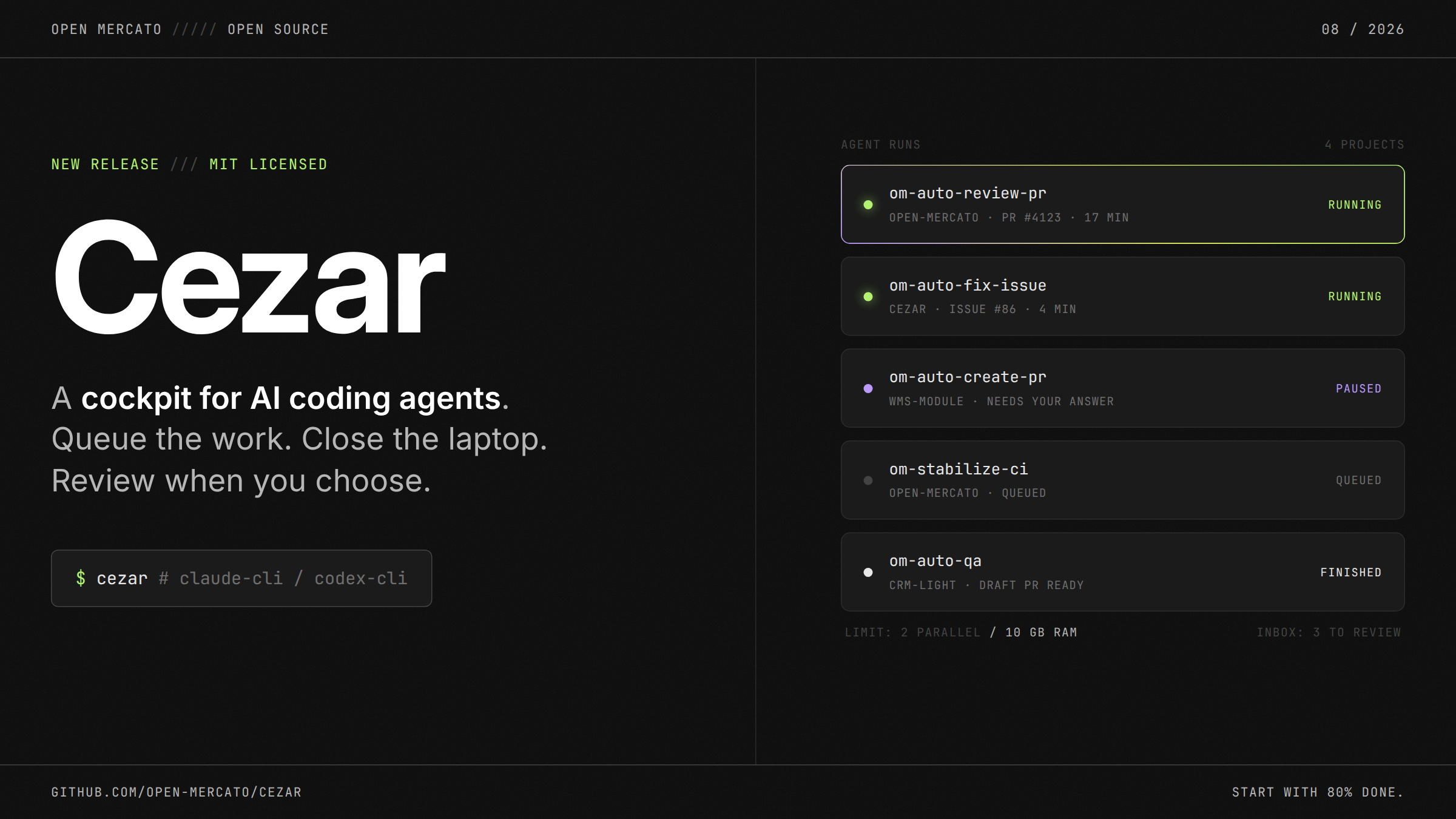
A deep dive into Cezar, our open source cockpit for AI coding agents: queue 30 tasks, set one limit, close the laptop. Architecture, Actions, autofix workflows and three ways to run it.
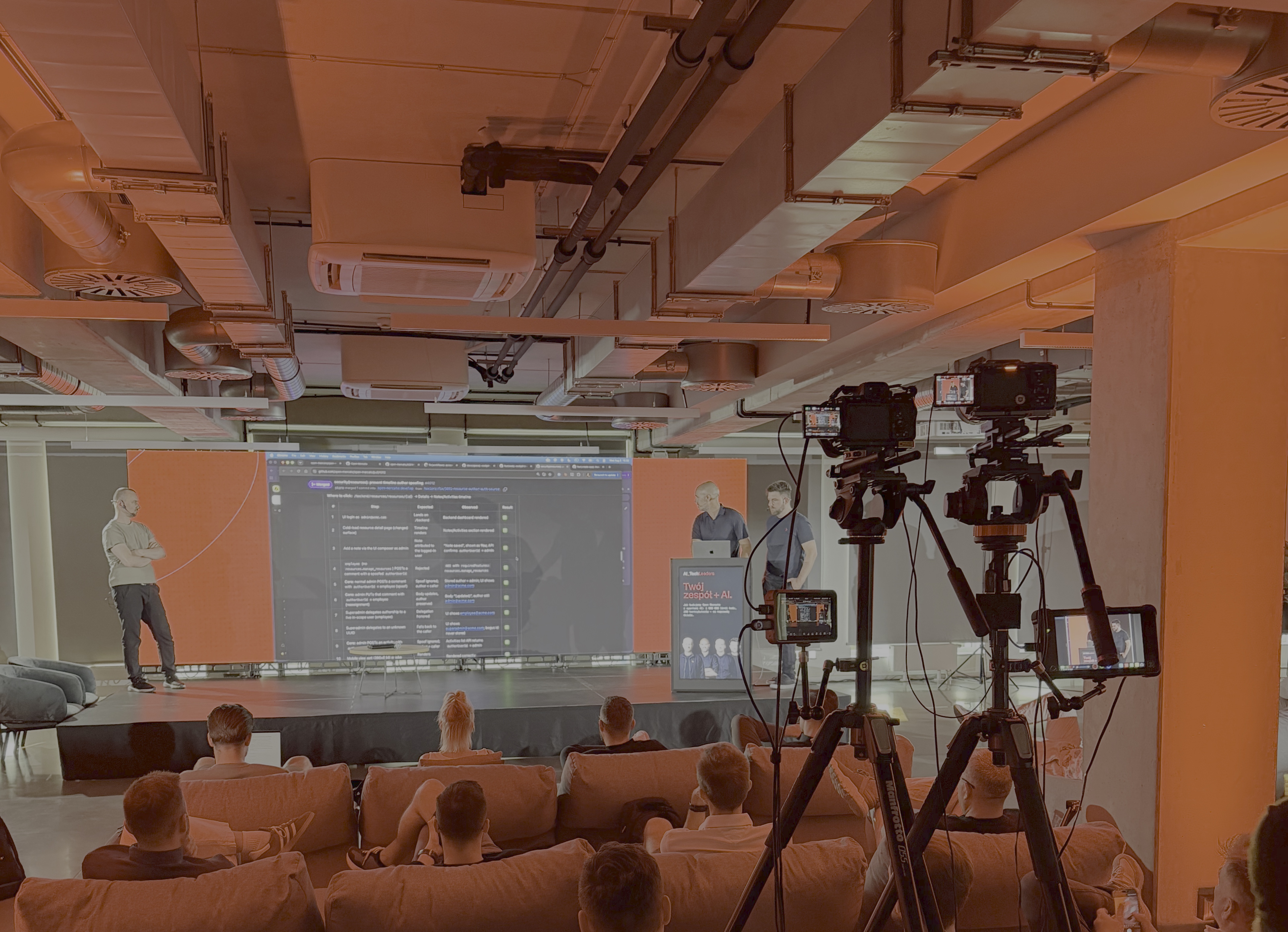
At the AI Tech Leaders launch event in Wroclaw, Poland we open sourced OM Skills and Cezar - the tooling behind our 1,000,000-line, AI-built ERP - and gave a first look at Sandboxes.
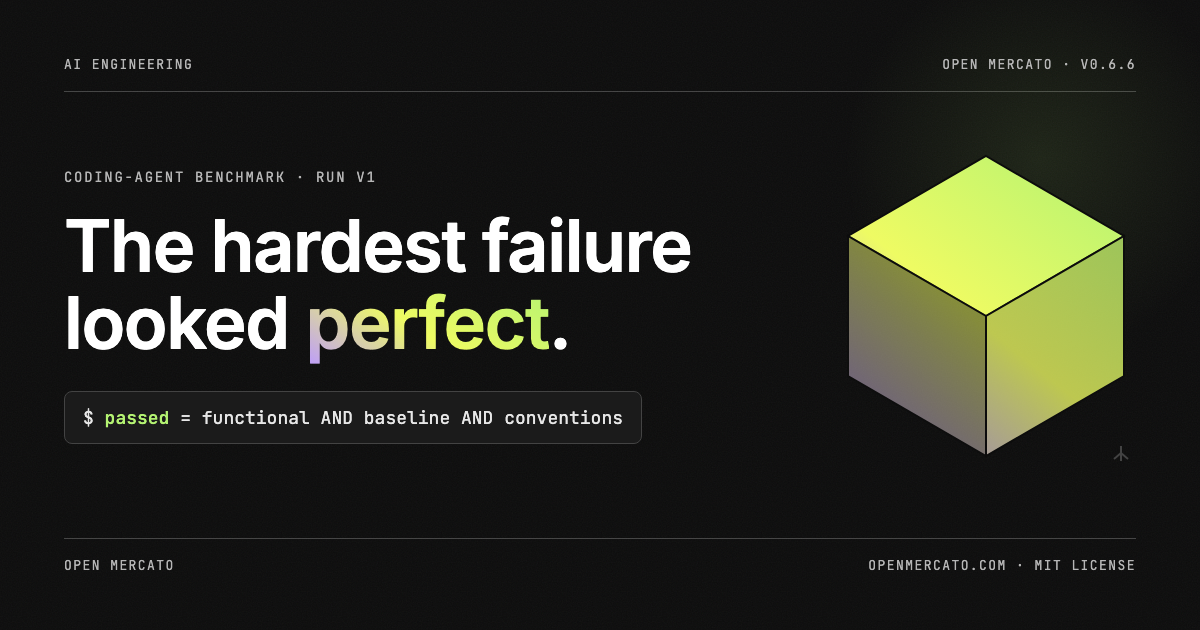
Three open-weight models built real Open Mercato features. The first benchmark run showed where agents are already reliable, and where convention-perfect code still breaks at runtime.
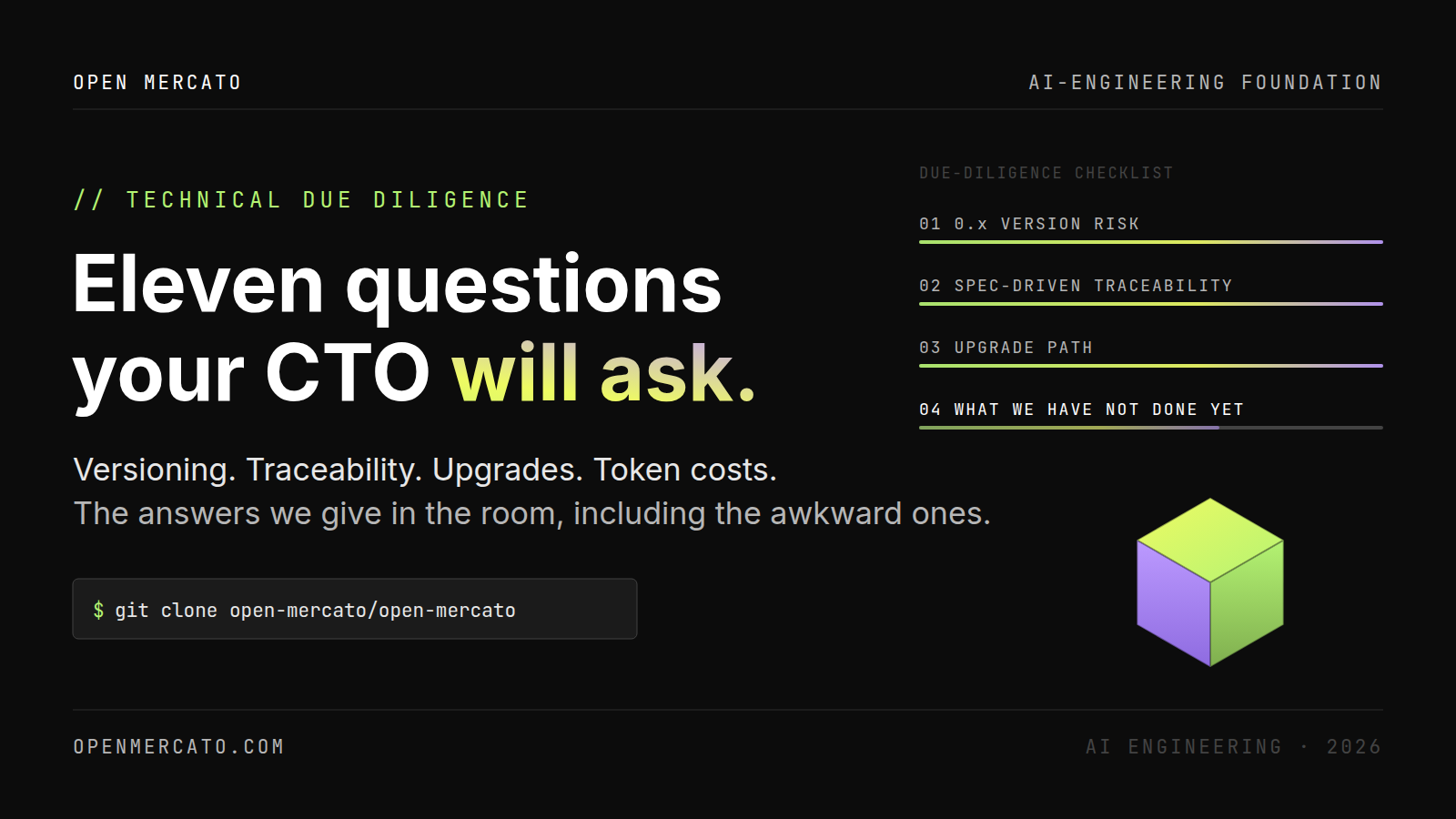
The questions that come up in almost every technical due diligence call: versioning, traceability, upgrades, contributor QA, token costs, scale and the business model behind an MIT license. With the answers we give in the room, including the ones where the honest reply is that we have not done it yet.
Odoo comes up in half of our sales calls - and it should. Here is the actual battle card our partners use, and the real difference in philosophy: a suite you configure vs a foundation that adapts to you, with AI doing the heavy lifting.
What 50+ customer conversations taught us: buying means the golden chain of lock-in, building from scratch means the weekend-demo trap. The third path - build on an open foundation you own.
Nobody we talk to wants to rip out SAP - and they should not. The battle card, the real customer pain points, and a four-step path to build new processes beside SAP in weeks, not change requests.
The most common competitor we meet in enterprise deals is an internal team with Claude Code. Here's why that's the wrong frame - one is the agent, the other is the foundation it runs on.
Odoo, ERPNext, Dolibarr, Tryton, Axelor and the Java old guard - an honest, implementation-level review of the open source ERP landscape, and why Open Mercato is the only AI-Engineered option.
Everyone has an AI agent demo. Almost nobody has an agent you can safely let into a real business. Agent Orchestrator - a new Open Mercato Enterprise module - changes that: flexible runtimes, native workflow integration, two-layer audit and built-in evals.
A new paper (arXiv:2605.01160) names the problem every CTO already feels: AI coding tools double individual output while degrading system-level delivery. The fix isn't a better model - it's specification discipline. Here's how it maps onto Spec-Driven Development at Open Mercato.
Piotr Karwatka's new tutorial shows autonomous AI agents going from idea to a production-ready app - GDPR audit logs, encryption, parallel branches and a coordinator sub-agent - with no babysitting. Here is the full breakdown of the workflow and why it points to where serious AI engineering is heading.
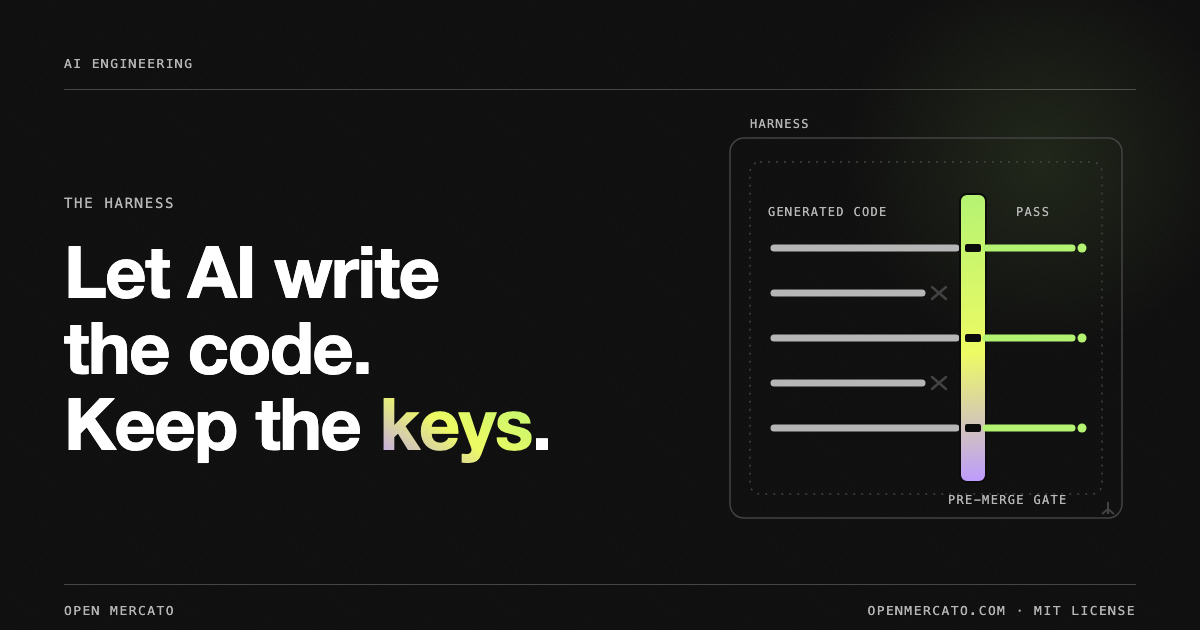
A team vibe-coded a warehouse over a weekend. By Tuesday the database had vanished. What actually keeps generated code safe is the frame it works inside, and whether that frame holds when 100+ PRs hit it in 48 hours.
On June 12, 2026 the US government ordered Anthropic to cut Fable 5 and Mythos 5 - even for foreign-national employees. The lesson for Europe: if you build on someone else's frontier API, you don't own your AI-engineering. Why Open Mercato bets on independent, EU-built, open-source AI-engineering.
The basics are answered elsewhere. With 27 partner agencies on board, a different set of questions comes back: where the advantage sits, what homologation buys you in a client conversation, and how you actually become a partner.
We did not write a single line of code by hand. 750,000+ lines later, here is the engineering discipline - spec-driven development, the AI harness, fork-free design - that lets three people ship at the pace of twenty.
The cost of writing code is collapsing toward zero - but for large-scale ecommerce and retail, what still decides success is engineering, not vibe coding. Piotr Karwatka on the difference, a one-day case study, and a practical adoption playbook.
You don't have to build AI to win the AI wave - you have to build the harness around it. The business case for AI engineering, told through Open Mercato.
The board catches FOMO, then the energy slams into the IT wall. That pushback is rational, not obstruction. Here are four plays we keep seeing in teams that roll out AI well — starting with a list of everything that could go wrong.
We have 25 agency partners. They are not shy. Here are the nine concerns they raise in almost every call - and our honest answers, including the ones that hurt to write. MIT vs. Enterprise: pricing, lock-in, framework complexity, and more.
Every enterprise IT team asks us the same 10 questions on the first call. Bus factor, vendor lock-in, AI-generated code, upgrade paths, scale, stability. Here are the honest answers - including the times we tell buyers we're the wrong choice.
What we've learned from sitting across the table from a regulated incumbent and a global manufacturer — and why most enterprise AI programs miss the actual unlock. Eight operational lessons, no PowerPoint.
I'm a Python/AWS engineer. I picked up an open-source TypeScript project (Open Mercato) and shipped contributions in four steps without learning Node first. Start where you're strong, expand quickly, and learn the basics last. Here's the playbook.
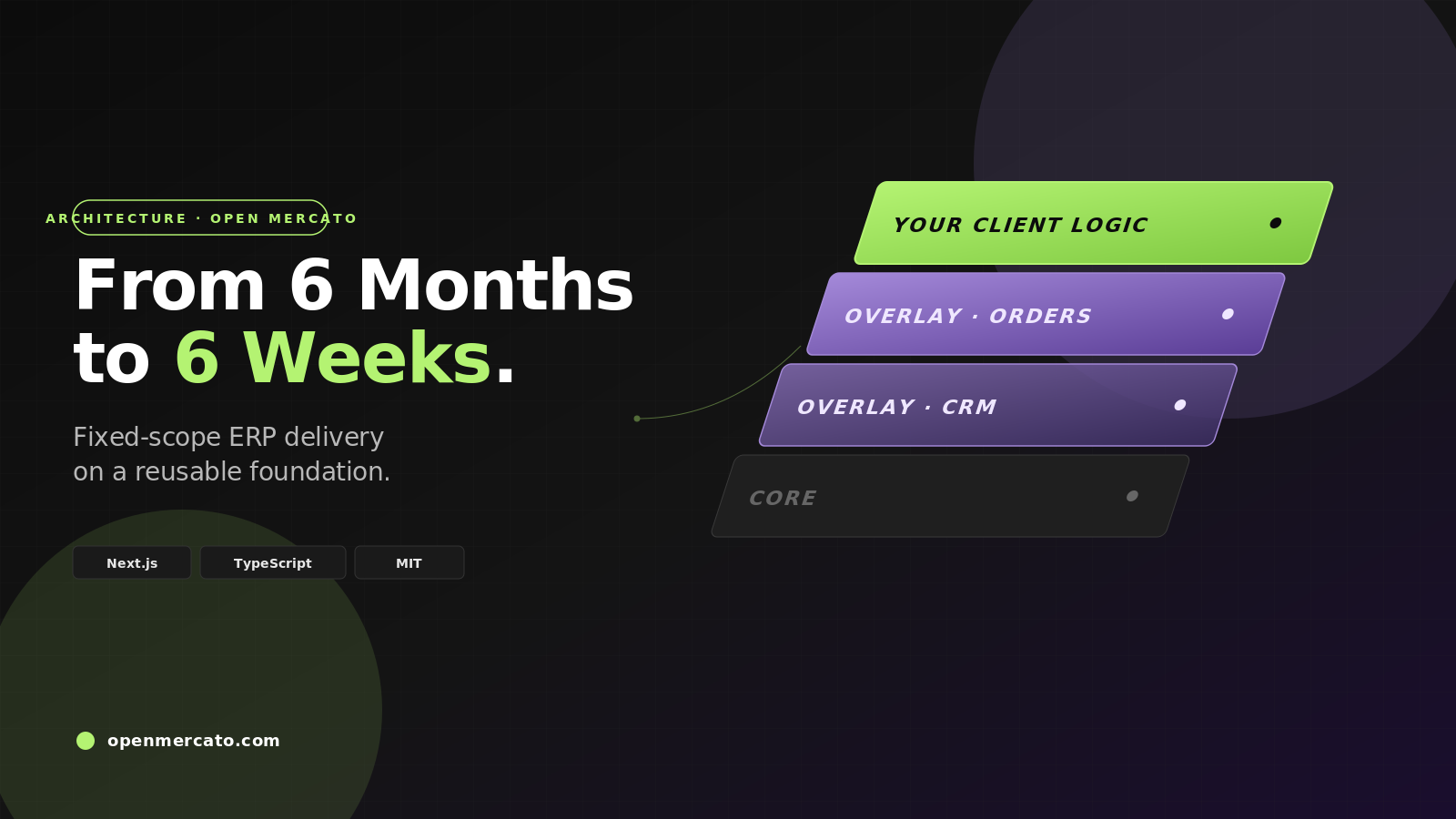
Every software house delivering ERP projects spends 4-6 weeks on auth, RBAC, multi-tenancy and audit trails before writing a single business feature. That is the infrastructure tax. Here is how to skip it - and ship a full logistics ERP in six weeks instead of six months.
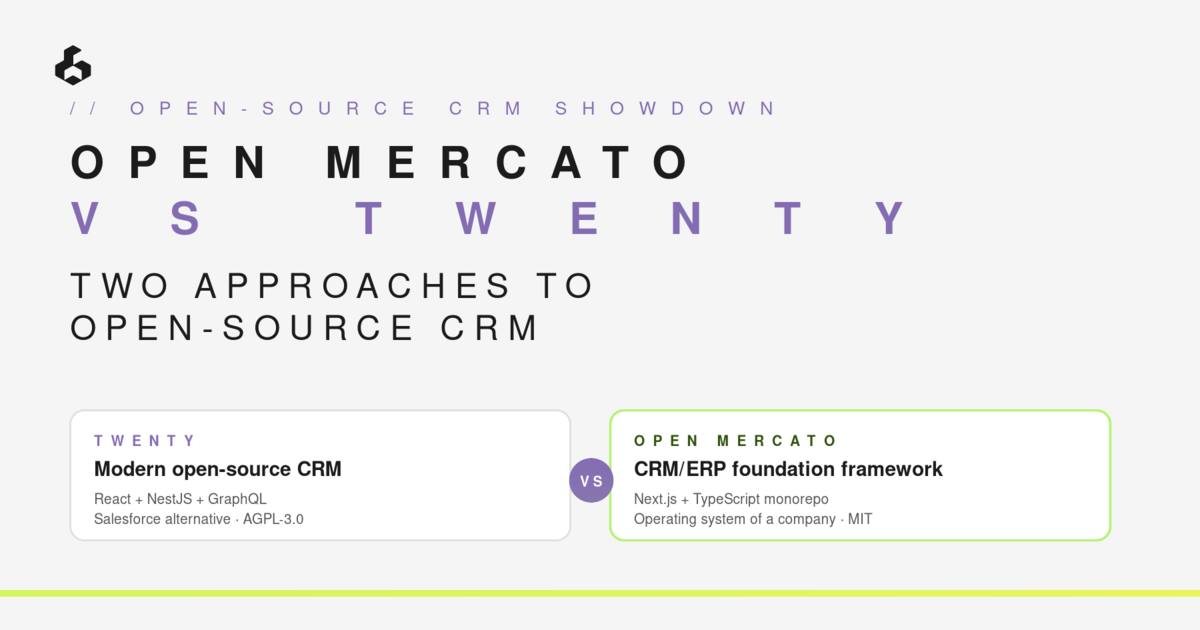
Twenty is the best modern open-source CRM. Open Mercato is a different category — a CRM/ERP foundation framework. A concrete, fair comparison and when to pick which.
Django has been the default for serious web apps for almost 20 years. But for ERP/CRM-class systems in the AI-coding era, a TypeScript-first platform with production modules out of the box is a stronger bet. Here's a concrete comparison.
Retool is brilliant for the first 6 months. The problem starts at month 18, when the invoice grows faster than the team. A concrete comparison and when to pick which.
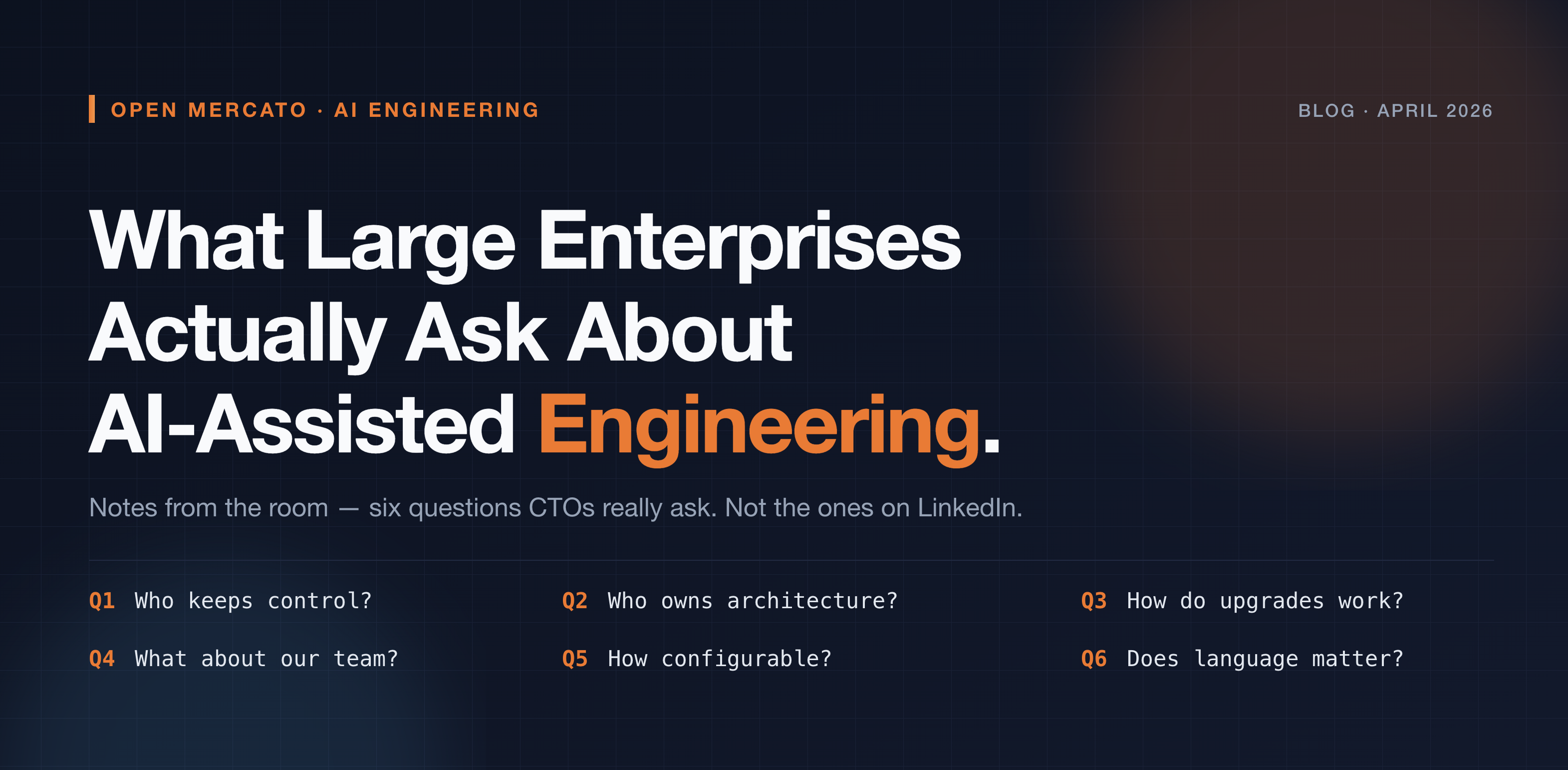
Notes from the room: what CTOs at telcos, banks, and industrial companies really ask about AI-assisted engineering. Control, architecture, upgrades, teams, timelines. The questions the Twitter demos never cover.
Enterprise software doesn't have to mean Java, SAP, or Oracle. Open Mercato is a full Node.js ERP platform with production-ready modules, field-level encryption, and AI-native architecture.
Most CRMs are built on legacy stacks nobody wants to touch. We built Open Mercato on Next.js, React, and TypeScript. Here's what we learned and why it matters.
After spending millions on enterprise infrastructure across multiple companies, I built Open Mercato — a TypeScript ERP framework that gives you 80% out of the box.
After building and exiting multiple software companies, I decided the CRM/ERP market needs a framework, not another product to configure.
The open-source ERP market is worth $2.85 billion and growing 10% a year. Odoo and ERPNext dominate. So why did I build a third option? Because neither solves the problem I keep seeing.