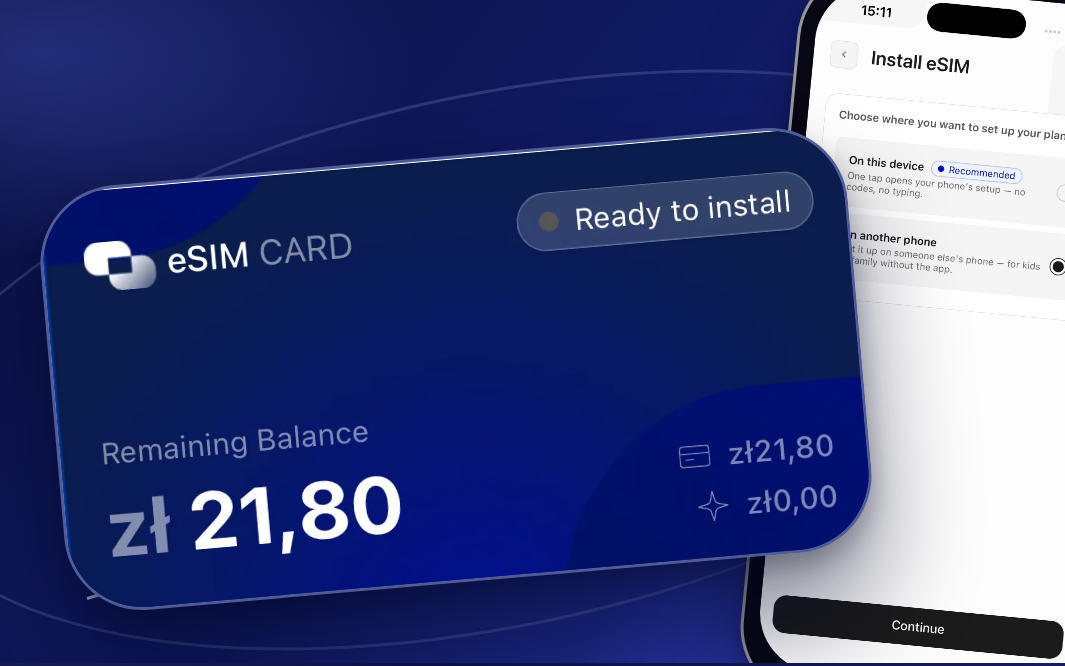
About this build
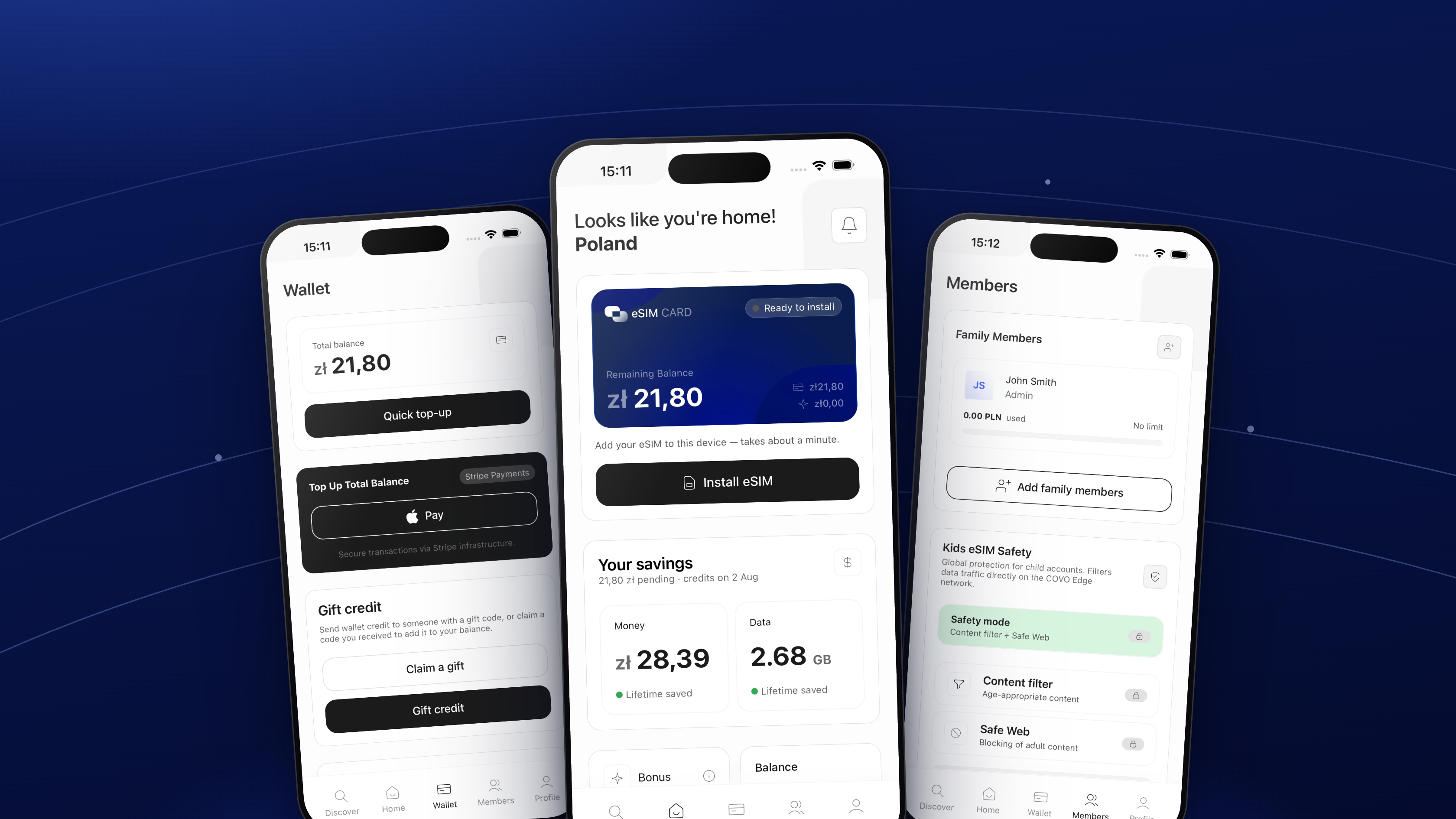
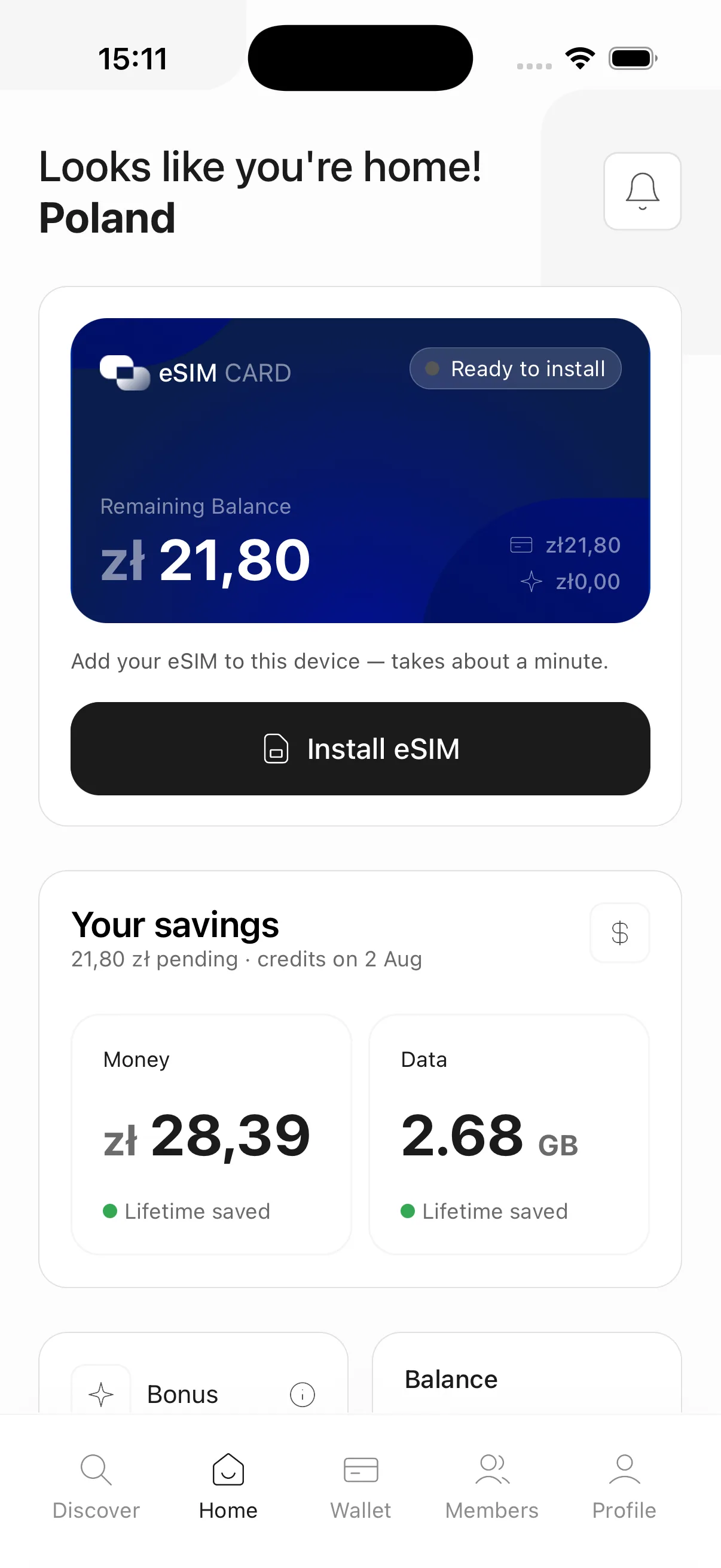
Covo is a consumer eSIM wallet for people who travel: one balance, mobile data in 190+ countries at local rates, nothing that expires. Full Stack House delivered it on Open Mercato in 2026 — the backend, the operator back office and the API behind the iOS and Android apps — and the apps are live in both stores.
What it does
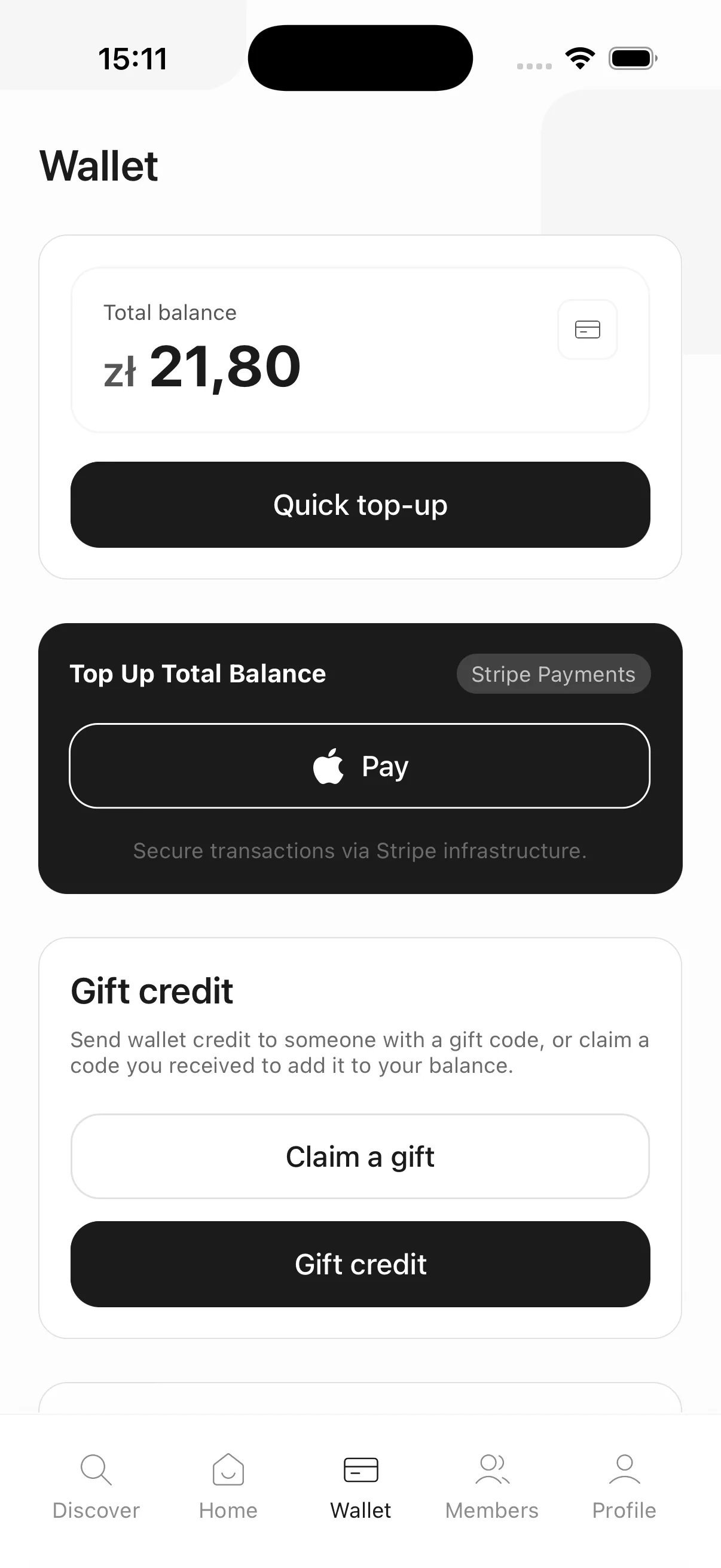
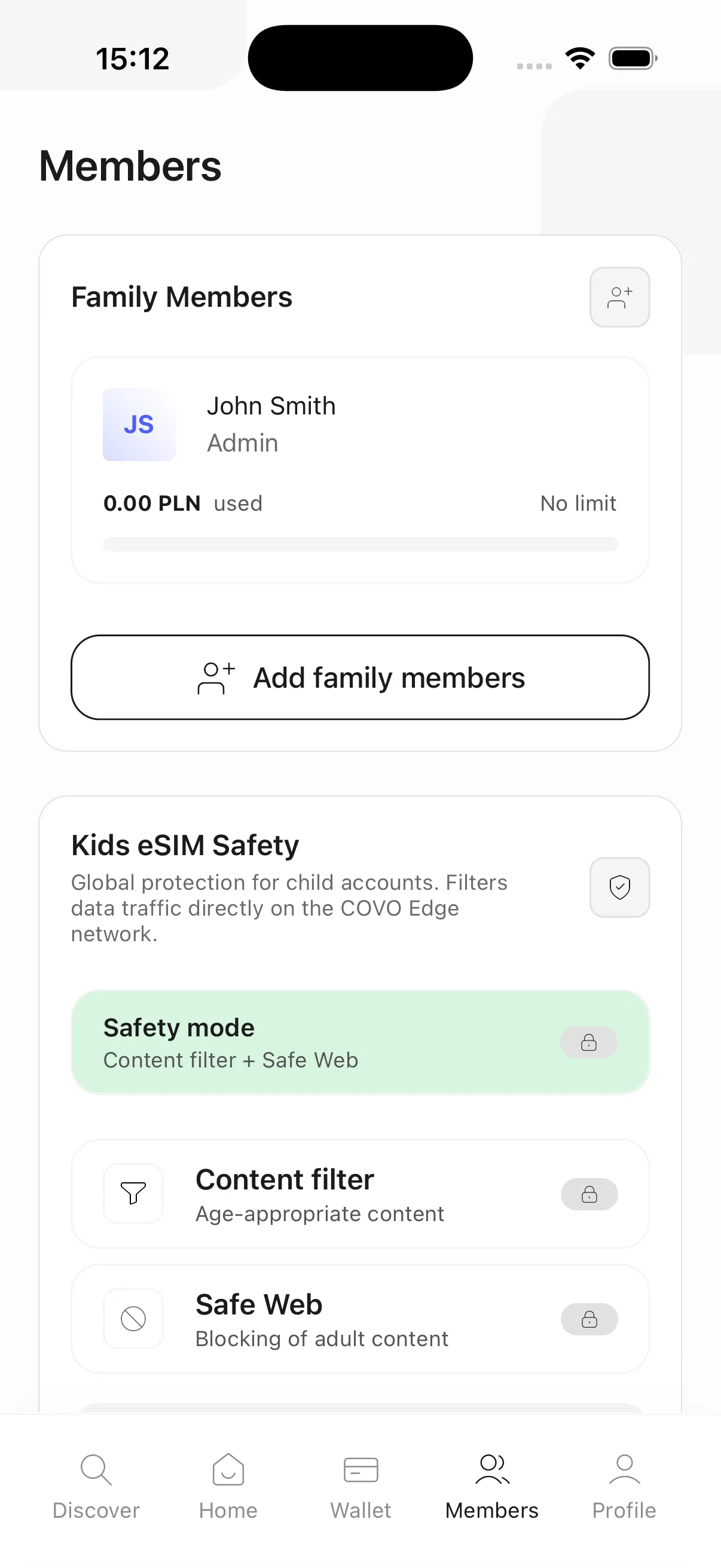
Travelers top up in one tap (Apple Pay / Google Pay via Stripe), see their balance in their own currency, share a family pool with per-member caps, and get a push when data runs low. Parents can switch on network-level content filtering for a child's eSIM.
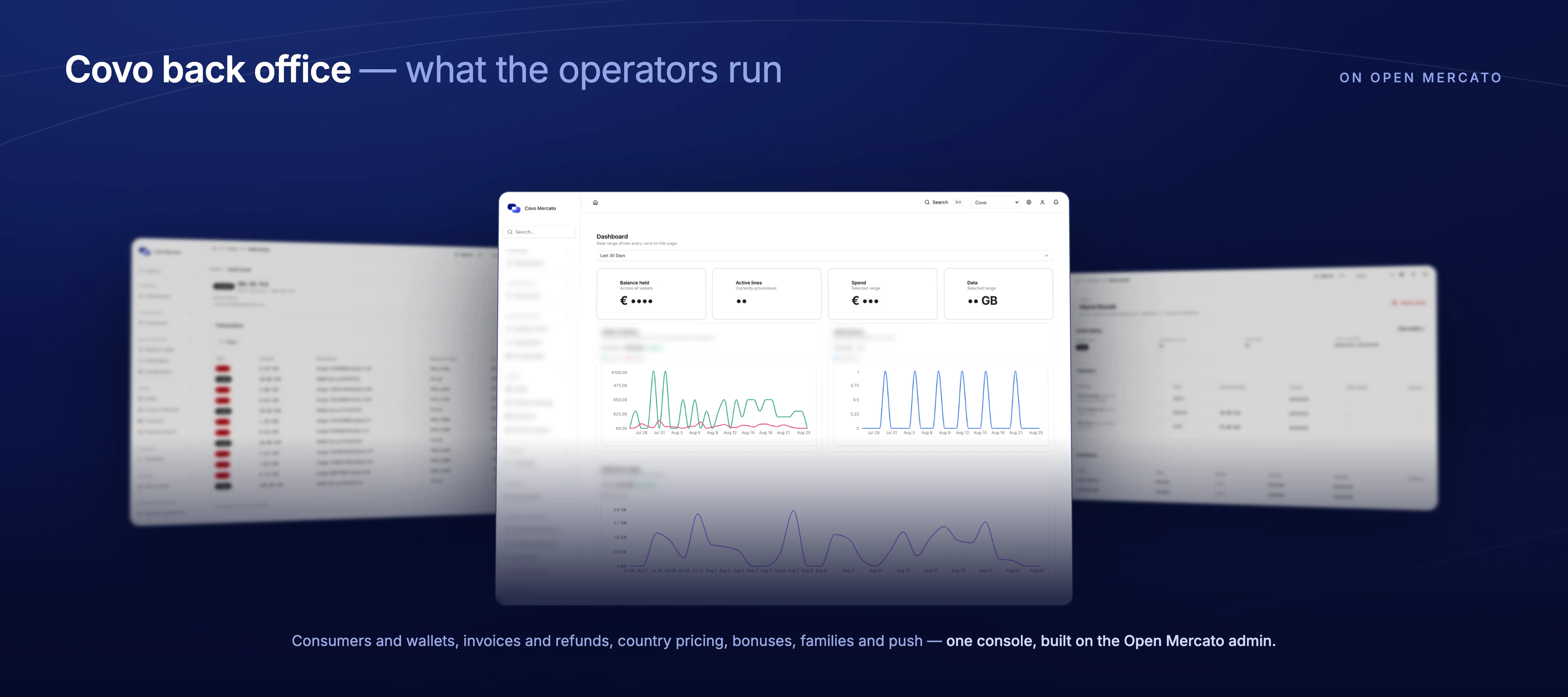
The operator side is Open Mercato's admin, extended with Covo's own modules: wallets and consumers, invoices and refunds, per-country pricing, bonus tiers, invite codes, and targeted push with deep links. Support, finance and growth work in one console instead of three tools.
Why it matters
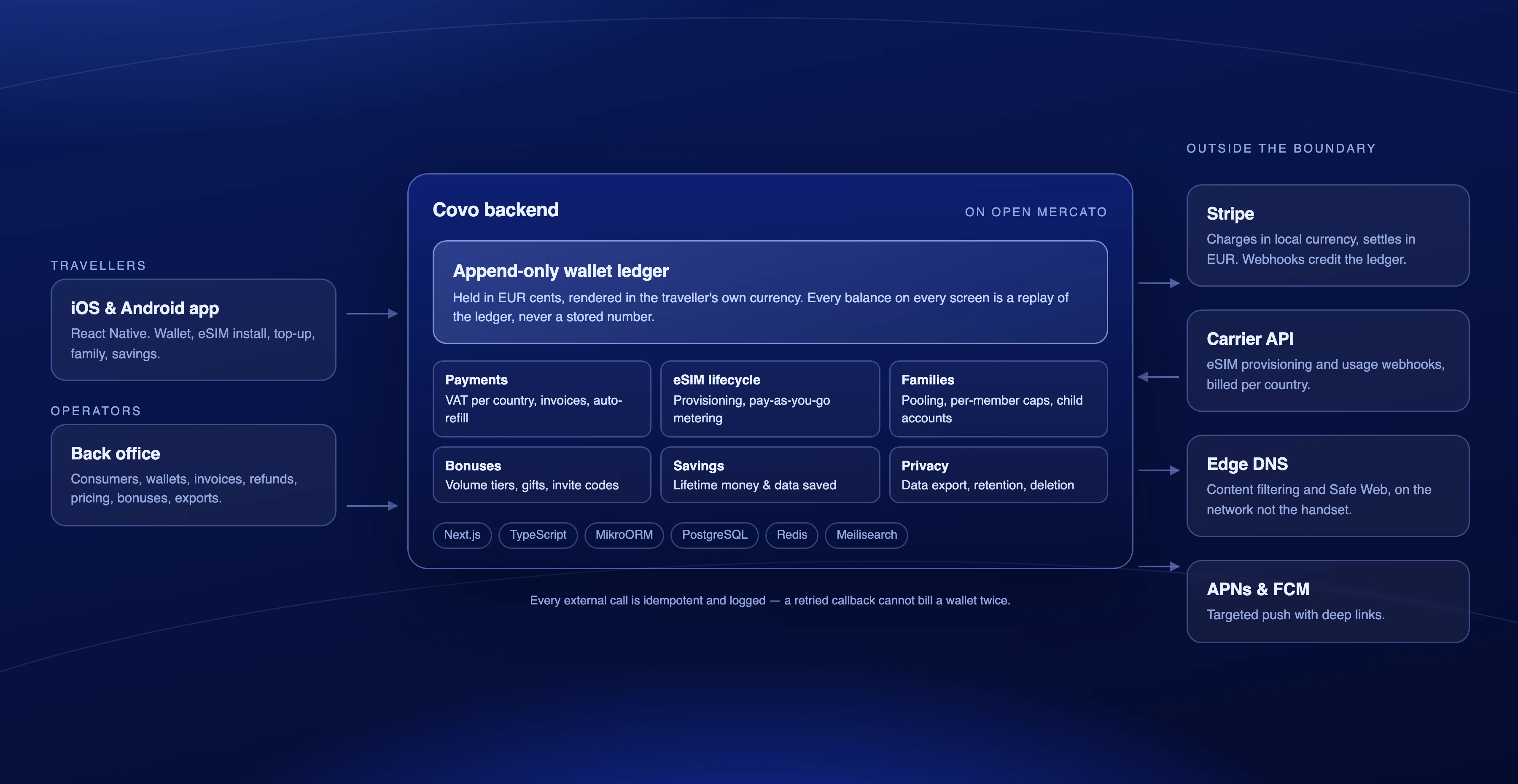
Prepaid money that never expires has to be right forever: one ledger in EUR cents, VAT by the country of top-up, usage metered while data burns down abroad, and every balance reconcilable against Stripe and the carrier years later. Covo's wallet is an append-only ledger with idempotent, webhook-driven carrier integration — a retried callback cannot bill twice.
Built on Open Mercato
The framework covered the parts no client wants to pay for twice: auth, tenancy, audit log, admin UI, module APIs, search and background jobs. That left the team free to spend the budget on the ledger and the eSIM lifecycle, packaged as app modules on top of the core. Read the full case study on fullstack.house for the money story and the architecture diagram.
What went upstream
Open Mercato had no mobile push. Full Stack House built it as generic core functionality and contributed it back: a per-tenant device registry (tokens encrypted at rest), an append-only delivery log with retries and reclaim workers, per-user notification preferences, and FCM / APNs / Expo adapters riding the existing communication-channels hub. Merged into Open Mercato in August 2026 — push is now part of the framework for every app built on it.