SuiteCRM alternative

An open-source CRM foundation for teams building in TypeScript.

Evaluate a TypeScript CRM and business-application foundation without giving up self-hosting or control over your customer data.

MIT open source1,928 stars on GitHub50+ plugins

Compare the technology stack and the modules your next workflow needs.

Ownership is solved. The next customization is not.

SuiteCRM already provides open-source code and self-hosting without per-user licence fees. The reason to consider Open Mercato is fit with your engineering stack and the operational modules your next application needs.
Existing modules need a migration plan of their own

Relationships, hooks and installed packages can carry years of process knowledge. Review that logic before moving, then prototype the highest-value workflow with Open Mercato CRM and sales modules.

Preserve relationships and daily workflows

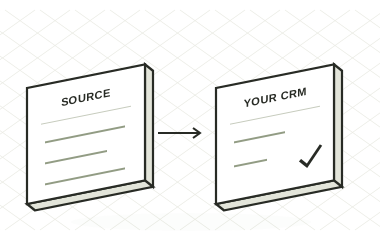
Map Accounts, Contacts, Leads, Opportunities, custom modules, relationships and sales documents. Rehearse the relationships and daily workflow with a representative sample before committing to the cutover.

Customer records, sales pipelines and order workflows.

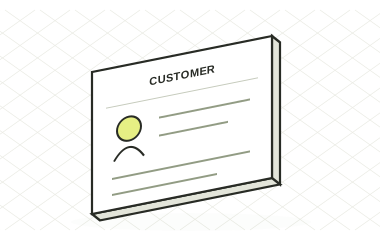
Linked customer records

Link companies and people to deals, addresses, notes and activities. Extend the records with fields that describe your business.

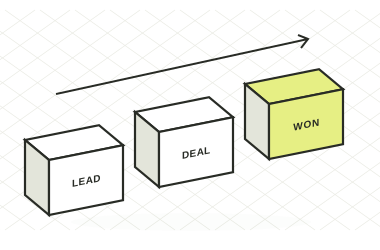
Configurable sales stages

Configure stages and track deal value, probability, expected close and ownership in board or list views.

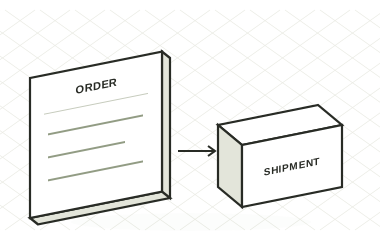
Quotes, orders and shipments

Use the sales and catalog modules for quotes, orders, products, payments and shipment records. Implement the handoffs and provider connections your process needs.

Custom entities and workflows

Extend the TypeScript application with your own entities, modules and workflows. Assess Module Builder packages, logic hooks, workflows, scheduled jobs and reporting as explicit migration work.

Feature by feature

Familiar CRM essentials. A foundation you can own.

Green checks show available capabilities in the stated scope. Arrows identify implementation work, including the specialist features your team may need to retain.

What your team getsBUILT FOR YOUR WORKFLOWOpen MercatoCore CRM + configurable modulesSuiteCRMOpen-source core; AGPLv3
Where Open Mercato adds control
Application core under an MIT licence✓×Different open-source licence
Capabilities available in both
Company and contact records✓✓
Deals and sales pipelines✓✓
Notes and activities✓✓
Custom fields✓✓Edition / plan scope applies
Business-specific automation✓Configure the workflow engine✓Capabilities vary by edition
Run on your own infrastructure✓✓
No per-user core licence fee for self-hosting✓Hosting and services extra✓Open-source edition
Implementation and scope
SuiteCRM packages and workflow customizations↗Assess and connect required services✓Within product / plan scope
Your custom migration and data mapping↗Scoped pilot and validation↗Export and integration work
Available in the stated scope Not included in this model Requires implementation

SuiteCRM also offers open-source source access, self-hosting and no per-user software fees. Its core uses AGPLv3; Open Mercato uses MIT. Both need implementation and maintenance. Compare architecture and workflow fit rather than assuming one has ownership and the other does not.

Reviewed 12 November 2026. Sources: SuiteCRM product documentation · Open Mercato core · Customer records

Explore implementation and commercial details
What mattersSuiteCRMOpen Mercato
Customer recordsSuiteCRM provides CRM records and sales processes.Companies, people, deals, notes and activities in the core application.
CustomizationOpen-source core; AGPLv3. Existing configurations need a capability review.Custom fields, entities and TypeScript modules; implementation scoped to the workflow.
Operational handoffReview the modules and connected systems used after a sale.Sales and catalog modules provide a starting point for quotes, orders and shipment records.
Hosting and costOpen-source deployment and services.MIT-licensed core; hosting, implementation, maintenance and third-party usage budgeted separately.
Migration detailModule builder packages, logic hooks, workflows, scheduled jobs and reporting.Keep source identifiers, verify relationships and rebuild required behavior in a tested pilot.
Explore Open Mercato CRM

Test the foundation with one real workflow.

Explore customer records, deals, custom fields and configurable workflows in Open Mercato CRM. Then bring an example from SuiteCRM: one account, its related records and the next operational step your team needs.

Explore Open Mercato CRM ↗
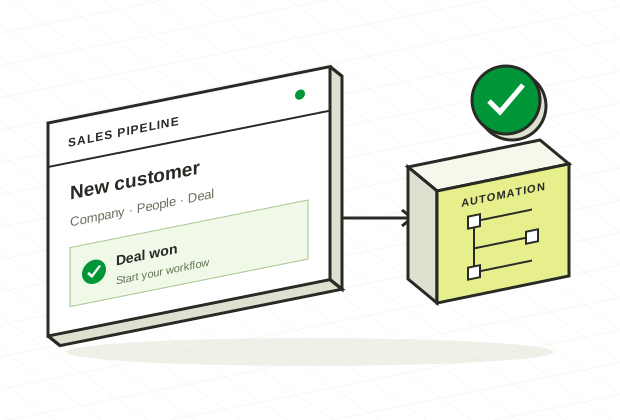
A won deal starts a configured CRM automation workflow

A SuiteCRM migration plan for records, relationships and workflows.

  1. Map the records and relationships

    Inventory Accounts, Contacts, Leads, Opportunities, custom modules, relationships and sales documents. Keep original identifiers and agree how each record maps to the new application.

  2. Audit the behaviors you depend on

    Review Module Builder packages, logic hooks, workflows, scheduled jobs and reporting. Decide what to retain, integrate or reimplement and agree acceptance criteria.

  3. Rehearse with one team

    Load a representative sample, validate permissions and relationships, and test a real customer journey from first activity to the operational handoff.

  4. Reconcile, train and cut over

    Compare record counts and key totals, retain an accessible archive where needed, handle final changes and agree rollback, training and support ownership.

Questions before you take the next step.

When is Open Mercato a good SuiteCRM alternative?

When you need an owned, extensible CRM and operational application, and have a team or partner to implement and run it. SuiteCRM can remain the better fit when its ready-to-use managed experience already matches your requirements.

Will all our SuiteCRM features transfer?

No automatic feature transfer is assumed. Review Module Builder packages, logic hooks, workflows, scheduled jobs and reporting. The core provides CRM and sales modules; specialized capabilities require configuration, integrations or development.

How should we compare the cost?

Compare the same scope over the same period: current subscriptions and administration versus implementation, migration, hosting, maintenance, support and provider usage. The MIT core has no licence charge; a production service still has costs.

Can we keep part of our current stack?

Yes, a phased architecture can be scoped. Define the system of record for each entity, the synchronization rules and failure handling, then validate them before moving users.

Bring the workflow that makes you question SuiteCRM.

Start with your record map, required integrations and the three changes that would make the biggest difference to your team.

Discuss your SuiteCRM migration

Talk through your process, integrations and implementation needs with the Open Mercato team.