The history is spread across files
Supplier LOTs, production notes and shipment records can require a manual reconstruction. TraceCore connects the records around the batch.
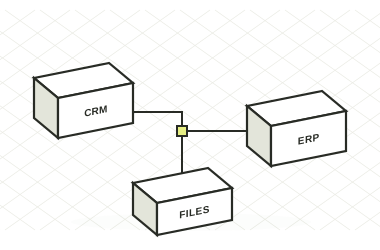

Connect incoming material LOTs, recipes, production and customer orders. TraceCore, built on Open Mercato, brings the manufacturing history into one operational system for food and supplement producers.
 MIT open source
 1,928 stars on GitHub
 50+ plugins
Supplier LOTs, production notes and shipment records can require a manual reconstruction. TraceCore connects the records around the batch.
The intended recipe is only part of the story. Tie production work to the materials and LOTs actually used.
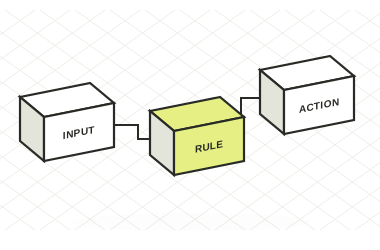
A traceability investigation also needs customer and order context. Connect sales, production and warehouse information in the same system.
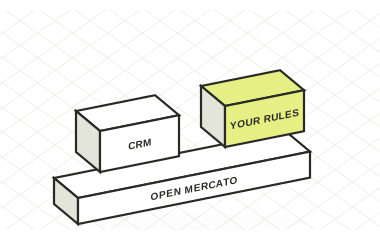
Work with supplier records and LOT relationships across the operational chain.

Connect recipes, production tasks and recorded material consumption.
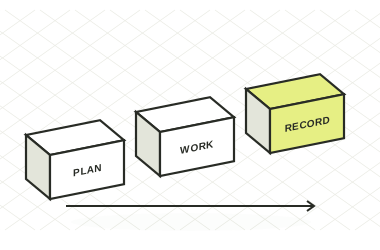
TraceCore's domain workflow includes locations, stock, expiration dates and inventory audits.

Link the production story to customer orders and shipment documentation.
Compare separate batch logs with TraceCore's domain implementation on Open Mercato, built around production and LOT relationships.
| What your team gets | CONNECTED LOT HISTORYOpen MercatoWith the TraceCore implementation | Manual batch logsSeparate spreadsheets and documents |
|---|---|---|
| Where Open Mercato adds control | ||
| Native links from material LOTs to production | ✓TraceCore | ×Manual reconstruction |
| Recipes linked to recorded material consumption | ✓TraceCore | ×Separate documents |
| Connected production tasks and stock movements | ✓TraceCore | ×Manual reconciliation |
| Customer orders connected to production history | ✓TraceCore | ×Manual cross-references |
| Integrated warehouse and inventory-audit workflow | ✓TraceCore | ×Separate logs |
| Capabilities available in both | ||
| Store supplier and batch identifiers | ✓TraceCore | ✓Manual records |
| Record stock locations and expiry dates | ✓TraceCore | ✓Manual records |
| Implementation and scope | ||
| Validation against your quality requirements | ↗Project-specific validation | ↗Process validation |
The highlighted column describes TraceCore, a specialized implementation on Open Mercato. These domain features are not all part of the generic core. Quality validation and regulatory requirements are assessed for your operation.
Reviewed 12 November 2026. Sources: TraceCore implementation · Open Mercato core · Customer records
| What matters | Traceability question | Open Mercato |
|---|---|---|
| Supplier LOT to production | Can you identify the input LOTs used in a finished batch? | TraceCore includes native LOT relationships across materials and production. |
| Recipe to actual work | Can you connect the definition to recorded consumption? | Recipes, tasks and material consumption share an operational context. |
| Warehouse history | Can location and expiry information be followed? | The domain implementation includes stock, locations, expiry and inventory audits. |
| Batch to customer | Can the investigation reach the commercial record? | Customer orders and shipment documentation connect to the manufacturing workflow. |
| Deployment | Where should manufacturing data and backups live? | TraceCore supports on-premise or dedicated VPS deployment. |
| Validation | What evidence does your quality process require? | Agree validation, access, audit and retention requirements with your quality team. |
TraceCore grew out of premium supplement production at BGW Pharma. The team used that experience to build connected production, warehouse and sales workflows on Open Mercato.
Explore TraceCore ↗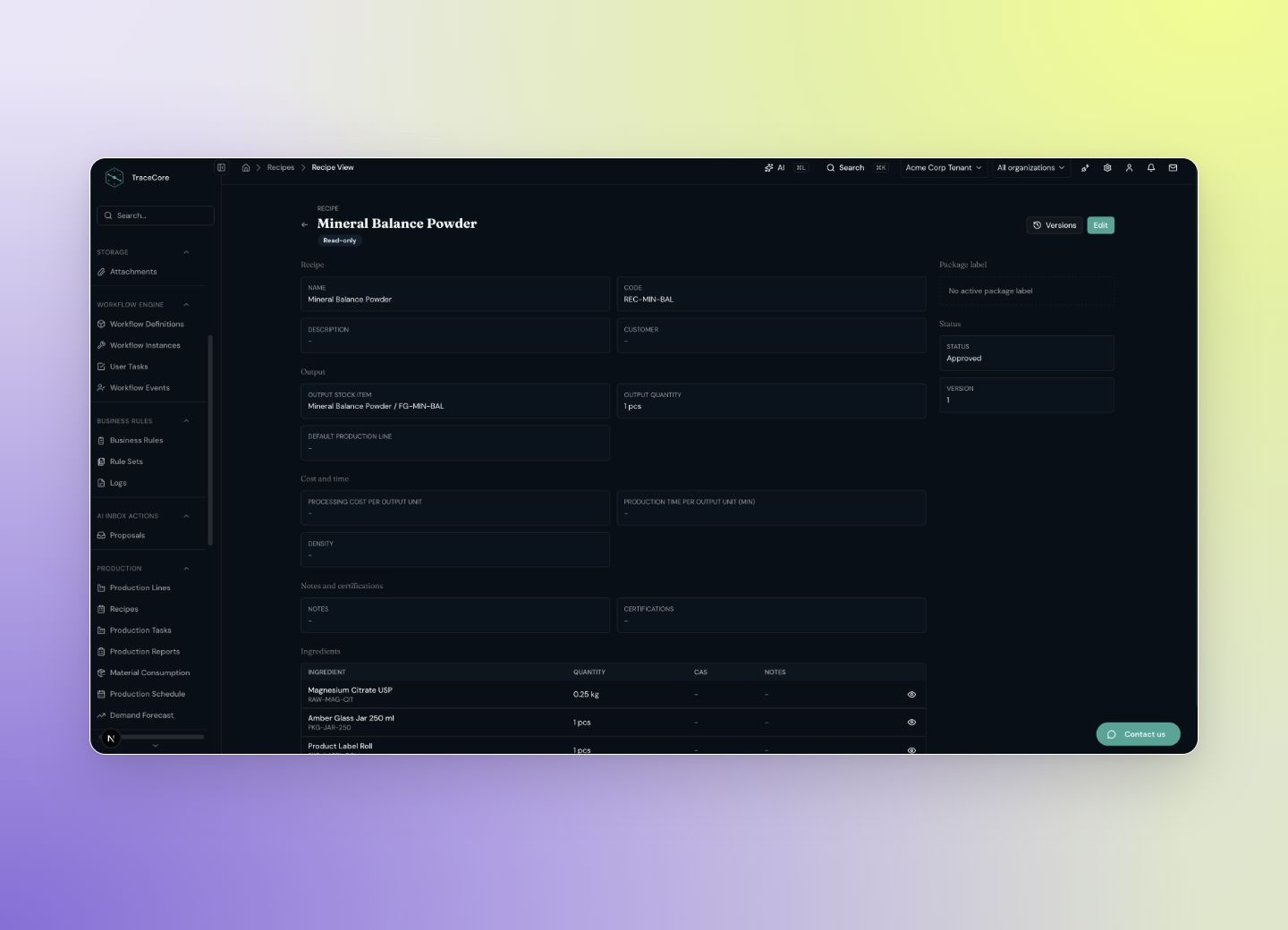
Identify supplier LOTs, recipes, production records, stock movements and shipment references.
Agree units, expiry, material substitutions, corrections and the records the quality team needs.
Load representative data and follow an input LOT through production to the customer order. Review missing links.
Agree acceptance criteria, access, retention and operating procedures before introducing the system more widely.
TraceCore is a specialist manufacturing implementation built on Open Mercato. Its production, warehouse and LOT capabilities belong to that domain product and implementation scope.
Your quality and compliance requirements need their own assessment and validation. Scope audit evidence, electronic records, signatures, retention and operational procedures with the responsible specialists.
TraceCore's published deployment options include on-premise and dedicated VPS. Discuss infrastructure, backup, recovery and support requirements with the implementation team.
Historical data needs mapping and quality checks. A sample helps establish whether LOT, material, production and shipment relationships can be reconstructed and what gaps remain.
Use its supplier LOTs, production records and customer orders to scope a traceability workflow with the right domain team.
Talk through your process, integrations and implementation needs with the Open Mercato team.