The estimate starts with platform plumbing
Authentication, permissions, CRUD screens and common customer records take time to build. Reuse the Open Mercato foundation and make the business-specific scope visible in the estimate.


Start with customer records, deal pipelines, permissions and a modular application core. Put your delivery effort into the workflows, screens and integrations that make your business work.
 MIT open source
 1,928 stars on GitHub
 50+ plugins
Authentication, permissions, CRUD screens and common customer records take time to build. Reuse the Open Mercato foundation and make the business-specific scope visible in the estimate.
Permissions, data migration, integrations and exception handling determine whether the CRM works in production. Put representative transactions and acceptance tests into the pilot.
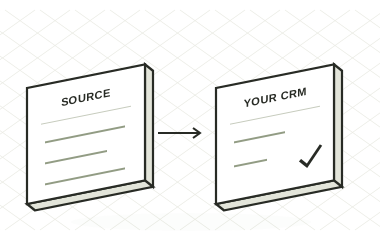
Buyers worry about maintenance and continuity. Agree source ownership, documentation, deployment access and support responsibilities as delivery milestones.
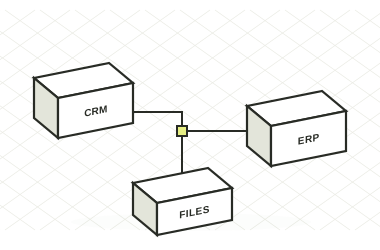
Reuse people, companies, deals, notes and activity workflows.
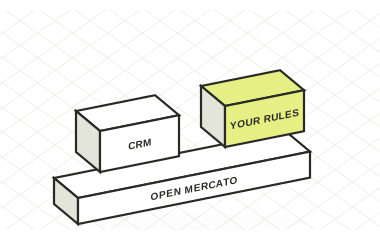
Build on authentication, organization scope, feature permissions and a consistent data-access architecture.
Create entities, screens, integrations and automation around your operating process.
Use a public TypeScript foundation with documented module conventions and a network of implementation partners.
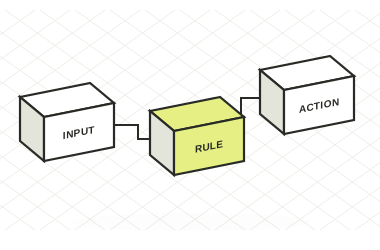
Compare the starting points before custom development begins. Open Mercato brings working business modules and application foundations into the project.
| What your team gets | START WITH THE CORE READYOpen MercatoReady modules + an extensible core | Build from scratchBlank application, before development |
|---|---|---|
| Where Open Mercato adds control | ||
| Company and contact management | ✓ | ×Build required |
| Deal pipeline and stages | ✓ | ×Build required |
| Notes and customer activities | ✓ | ×Build required |
| Quotes and sales orders | ✓ | ×Build required |
| Authentication and role permissions | ✓ | ×Build or integrate |
| Organization-scoped data access | ✓ | ×Build required |
| Custom-field and entity extension framework | ✓ | ×Build required |
| Workflow engine and module conventions | ✓ | ×Build or integrate |
| Capabilities available in both | ||
| Choose your deployment infrastructure | ✓ | ✓ |
| Develop business-specific screens and rules | ✓Custom development | ✓Custom development |
Comparison of starting points: a cross means the blank application does not include that capability yet. Both approaches involve development, integration, testing and ongoing operation.
Reviewed 12 November 2026. Sources: Open Mercato framework and licence · Open Mercato core · Customer records
| What matters | Delivery question | Open Mercato |
|---|---|---|
| Customer model | Which relationships and records are already covered? | Companies, people and deals provide a starting model to extend. |
| Business rules | What needs configuration and what needs development? | List required fields, workflows, screens and integrations explicitly. |
| Migration | How will history and relationships be validated? | Agree source mapping, sample imports and reconciliation criteria. |
| Production readiness | Who is responsible for hosting, access and recovery? | Assign those responsibilities and test the operating procedures. |
| Handover | Can another team maintain the system later? | Deliver source, documentation, deployment access and a support agreement. |
Covo's team built a travel wallet, eSIM lifecycle and operator back office on Open Mercato. The case shows how domain-specific records and workflows can be delivered on the same application foundation.
Read the Covo story ↗
Describe users, records, decisions and handoffs. Bring examples of the cases the current tools handle poorly.
Agree the core workflows, data model, integrations and measurable acceptance criteria.
Configure and extend the foundation, rehearse imports and test a complete workflow with representative data.
Document deployment, support and maintenance responsibilities. Train the team and agree the next release priorities.
Your internal engineering team or an Open Mercato implementation partner. The partner directory includes agencies offering consulting, custom development, integration and migration services.
The main variables are business rules, integrations, migration, user interfaces and ongoing support. Scope a first release and compare proposals against the same acceptance criteria.
The Open Mercato core is MIT licensed. Confirm ownership and access for project-specific code, infrastructure, accounts and third-party components in the agreement with your delivery team.
AI-assisted development can work within the framework's conventions. Production delivery still needs requirements, review, testing, migration validation and an accountable operating team.
We can help you find a delivery partner and shape a first release with clear outcomes, integrations and acceptance criteria.
Talk through your process, integrations and implementation needs with the Open Mercato team.