The message arrives. The handoff begins.
A tenant reports a problem on WhatsApp. Someone reads the message, works out who should deal with it and forwards it to another person. Then come the questions, photos and follow-ups. The repair is one job. Coordinating the repair becomes another.
This was the process Kickserve wanted to change for a property-management use case in Dubai. The Munich agency built an application on Open Mercato that connects tenant messages to a maintenance board and automatically assigns requests to the appropriate team member.
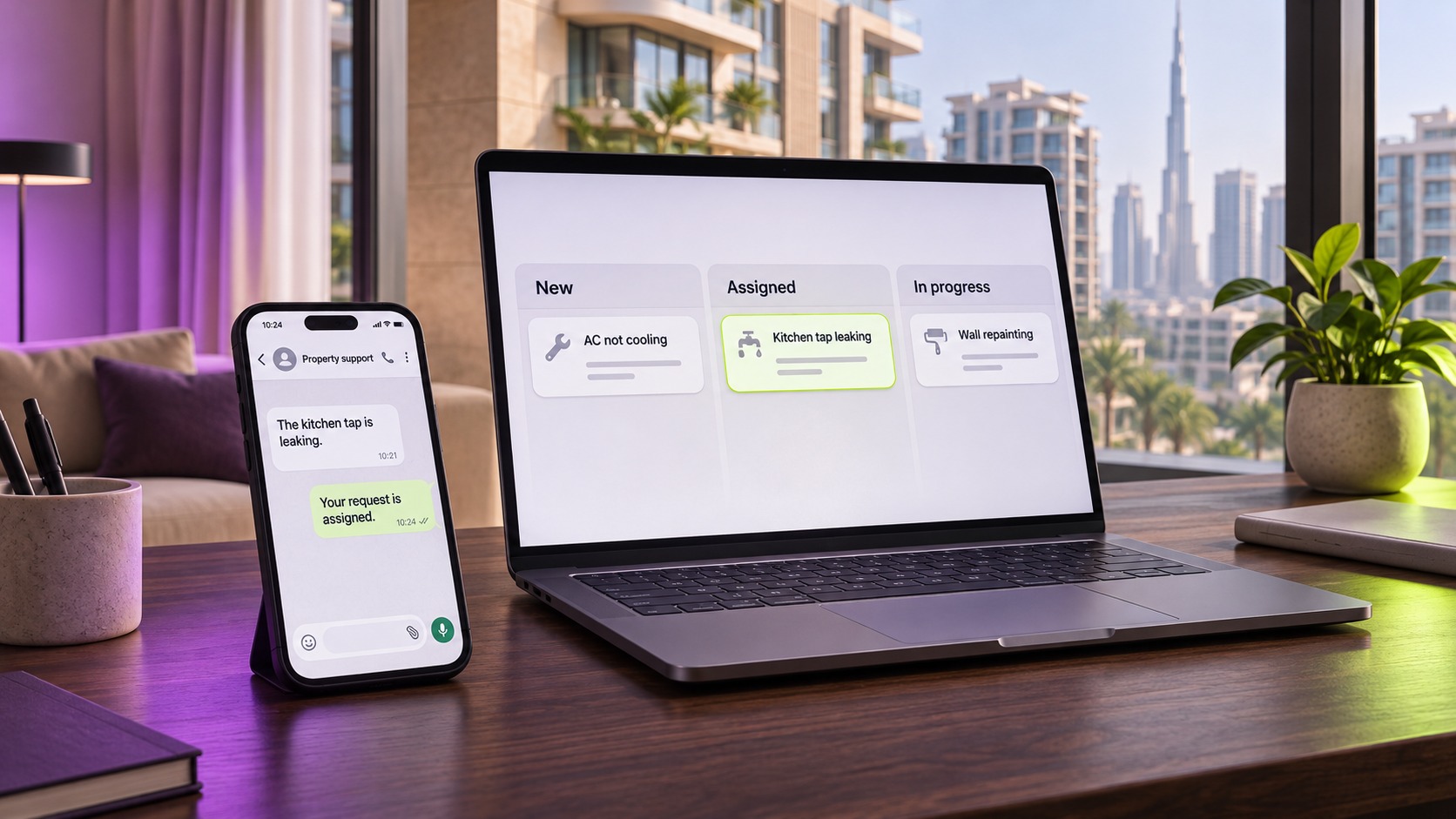
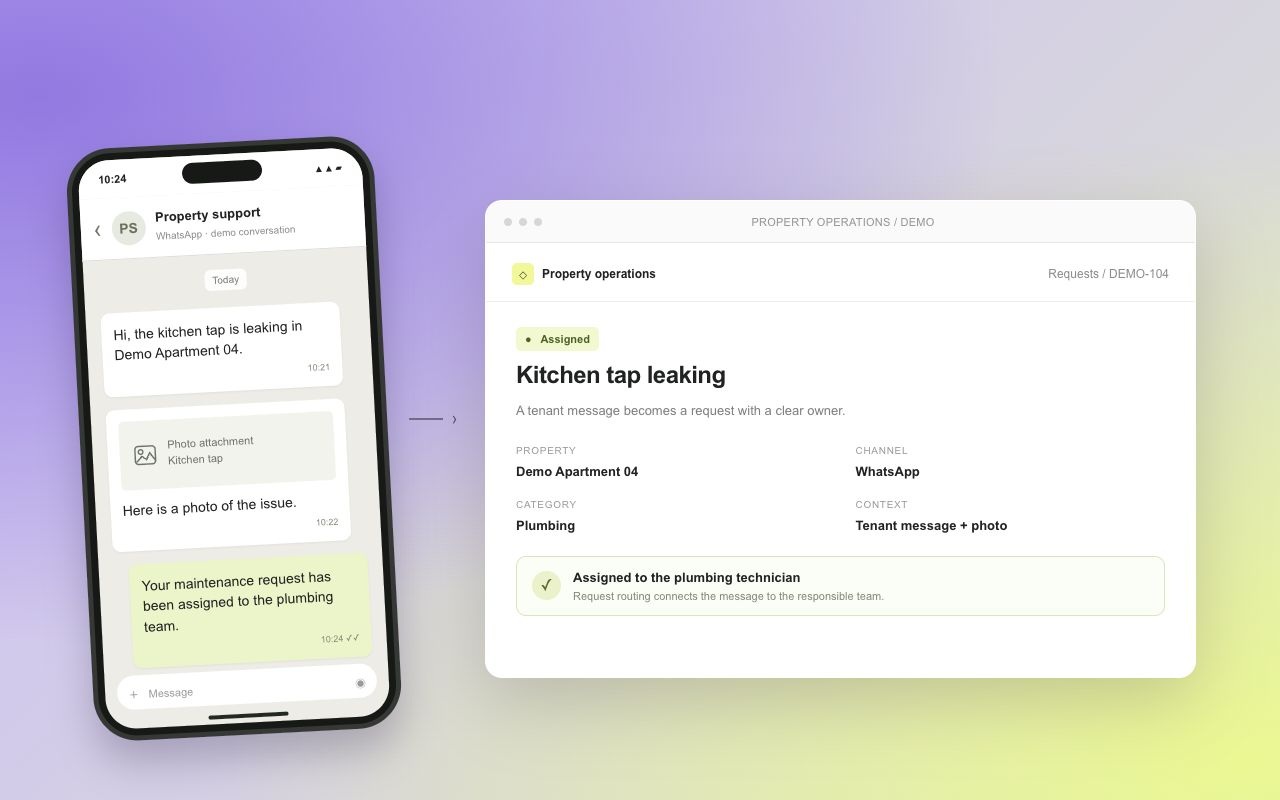
The starting point was deliberately familiar: tenants could keep using WhatsApp. The change happened behind the conversation, where a message became a recorded request with somebody responsible for it.
A property workflow, shaped by the people doing the work
In property management, different problems need different people. An electrical fault belongs with an electrician. A leaking tap belongs with a plumber. When one operator manages several properties, deciding where each request should go becomes a recurring coordination task.
Ahtsham Ulhaq, who works on partnerships and business expansion at Kickserve, described the previous process as a series of WhatsApp handoffs. The tenant contacted one person, that person passed the issue to a colleague, and information moved back and forth between them.
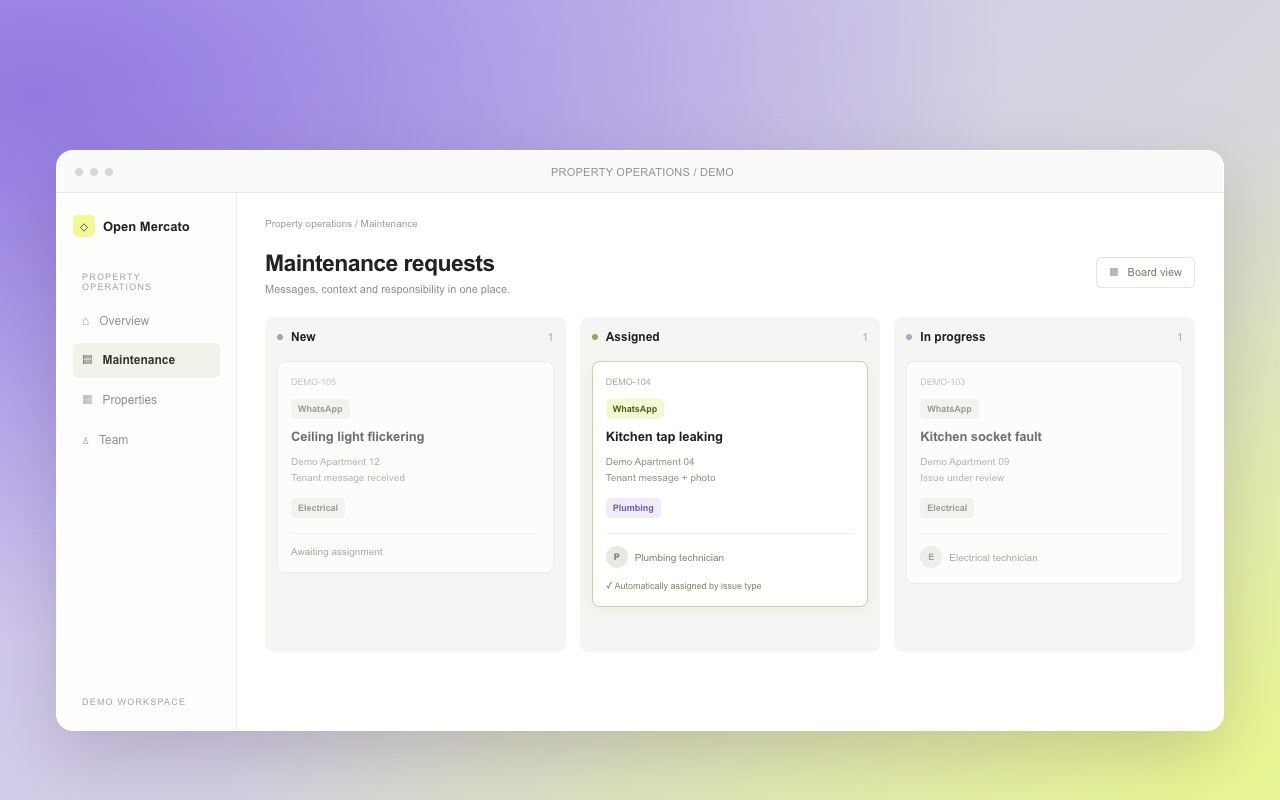
The team's goal was to remove that manual relay. They connected WhatsApp to an application built around the actual maintenance process: capture the query, register it on a board and assign it to the person responsible for that kind of issue.
Keep the conversation. Connect it to the operation.
The workflow described by Kickserve brings together three practical steps:
- Receive the request through WhatsApp. The tenant reports the problem through the channel already used for property communication.
- Register it on the maintenance board. The query enters the operational system, where the team can work with it as a request.
- Assign the relevant specialist. The system routes the issue to the appropriate team member, including separate responsibilities for electrical and plumbing work.
Photos were also part of the process Ahtsham described, helping the people involved review the issue and the work. The point was to connect that context to the maintenance workflow, rather than rely on somebody repeatedly passing messages between people.
This is where the product's value becomes concrete. A familiar messaging channel handles the conversation, while the application handles the transition from an incoming query to assigned work.
Why an agency with developers still chose a foundation
Kickserve came to the project with experience in e-commerce and business systems, including Magento, Shopware, Shopify and Odoo. Its JavaScript developers had worked with Node.js and TypeScript for years and were already building agent-based solutions.
The question was therefore how to structure the application they were building. In the conversation, Ahtsham drew a distinction between generating a large amount of code and creating a system that remains maintainable as it grows. Without a solid base, he was concerned that agent-assisted development could produce a tangled application that would be difficult to scale.
After examining Open Mercato's architecture, he recommended it to the team. They used it as the application's base and customized it for the property-management workflow. Their domain-specific work connected tenant communication, maintenance requests and specialist assignment.
The choice reflects a practical approach to building with agents: begin with an application foundation, then put the team's effort into the process that makes the product useful.
A working product, ready for the next conversation
By the interview on 27 October 2026, Kickserve reported that the solution was ready and had been tested internally. A colleague based in Dubai was preparing to present it to potential customers.
That is the milestone this case captures: an internally tested property-management product, with a concrete workflow to demonstrate. Production rollout, customer adoption and quantified operational savings had not been established in the conversation.
The product gave the team something specific to bring into those next discussions. They could show how a tenant's WhatsApp message enters a board and reaches the right specialist, then use customer feedback to shape the next iteration.
Build around the handoff that matters
Kickserve's project starts with a small but consequential transition: a person reports a problem, and another person needs to take responsibility for it. Connecting those moments is what turns a chat channel into part of a business process.
For an agency, that is an opportunity to build a focused product around domain knowledge. Open Mercato supplied the base; Kickserve added the property-maintenance workflow it wanted to bring to market.
Based on the conversation with Ahtsham Ulhaq on 27 October 2026. Product status reflects that interview. The cover is an AI-generated illustration; the interface mockups use fictional data and illustrate the described workflow, not the product's actual screens.
- Open Mercato application foundation
- WhatsApp integration
- Custom request board and assignment logic
- Agent-based property-management automation