The question that outlasts the email thread
A client asks why their licensing agreement contains a particular clause. The lawyer who negotiated it six months ago remembers the conversation. What happens when a colleague takes the call?
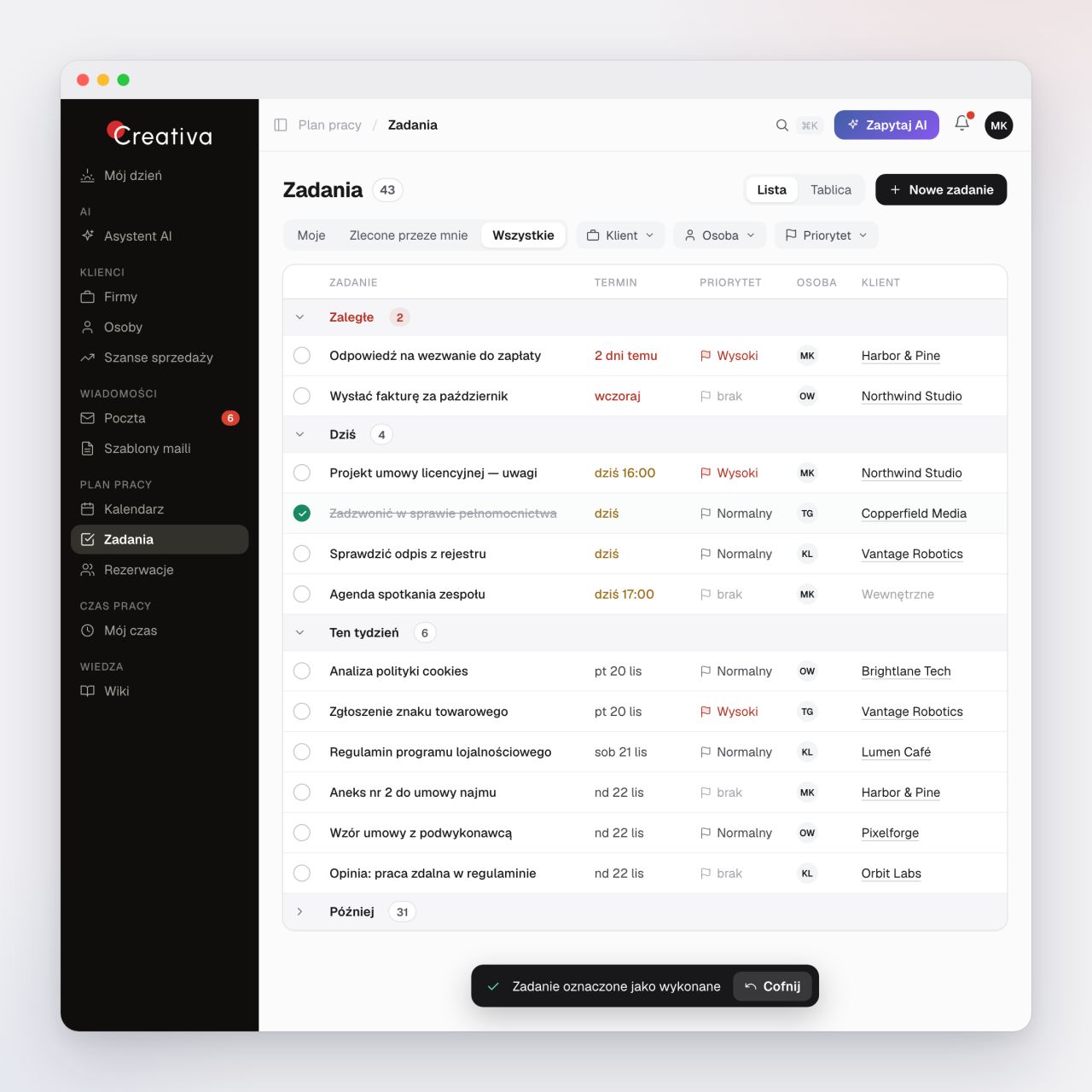
Creativa promises clients a lawyer who knows their business. Much of that knowledge lives in individual inboxes. Pipedrive holds the sales history, ClickUp holds the tasks, and meeting transcripts hold pieces of the reasoning. The firm connected its tools with automations. A lawyer picking up a file still had to piece together the story.
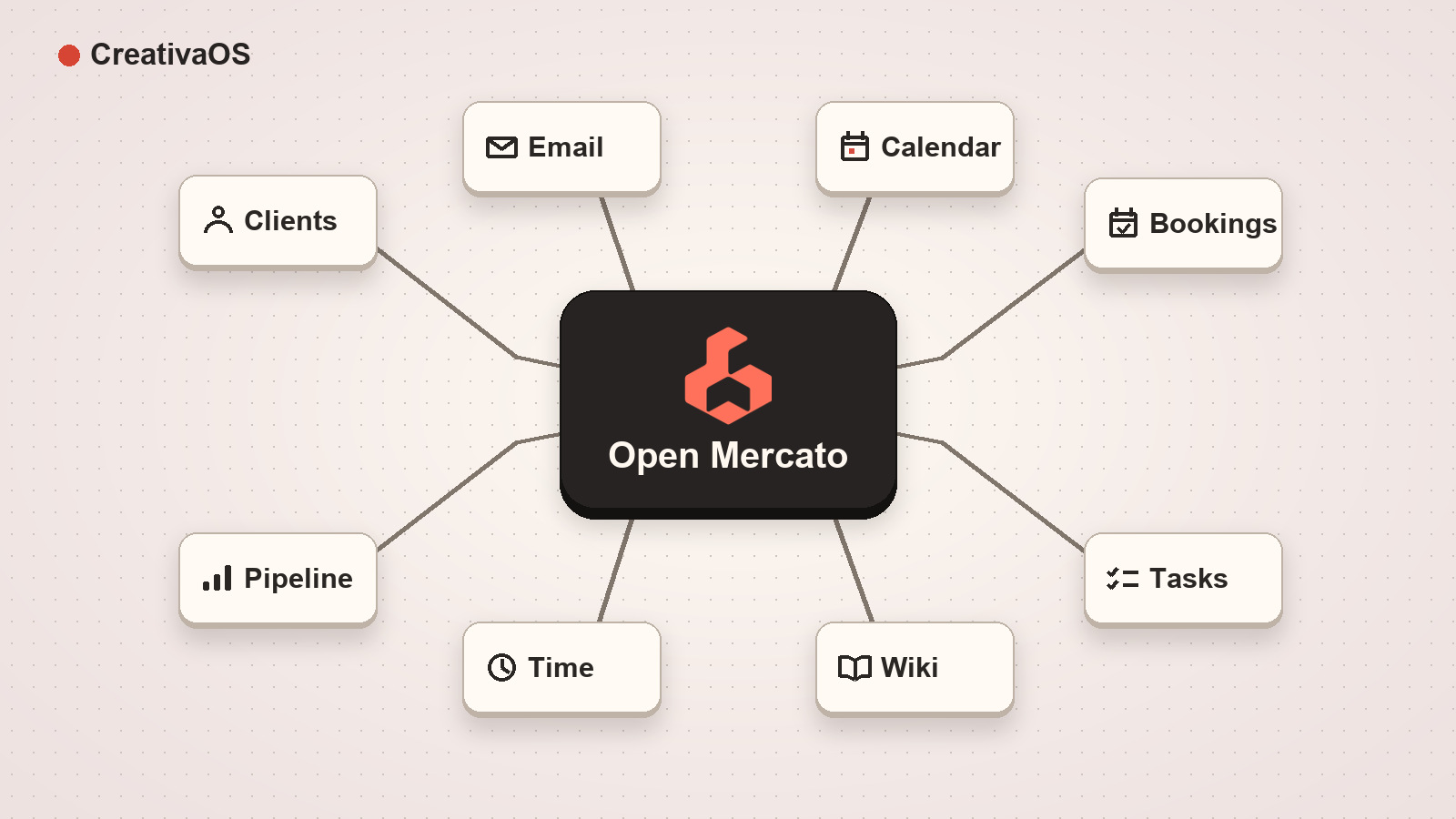
Creativa had already written a goal into its business plan: one place to look up a client’s history. How to build it was an open question. In July 2026 the firm started building CreativaOS with AI coding agents, using Open Mercato as its foundation.
Open the client file where the conversation left off
In the Northwind Studio example, a contact asks whether the license term can start on the signing date. Her email about §7 appears on the client’s timeline. Scroll down and there’s a meeting, a colleague’s note about a new request, and an earlier version of the agreement. The lawyer following up has somewhere to start even if the original exchange never reached their inbox.
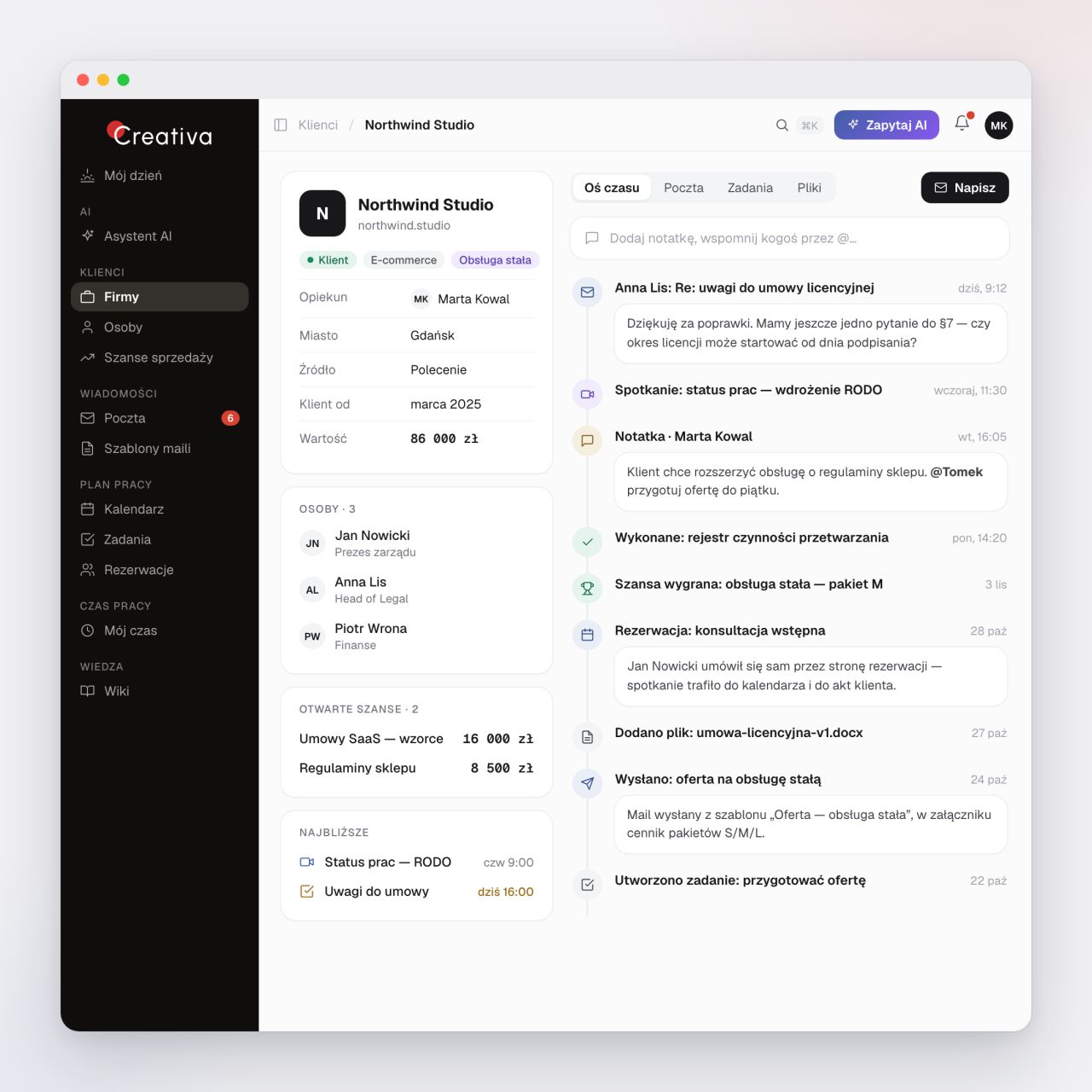
The same history matters when the handover happens on the client’s side. A new contact may be meeting the firm for the first time. Creativa wants the lawyer to be able to show what their predecessor agreed and explain how they got there.
From a booked consultation to time on the file
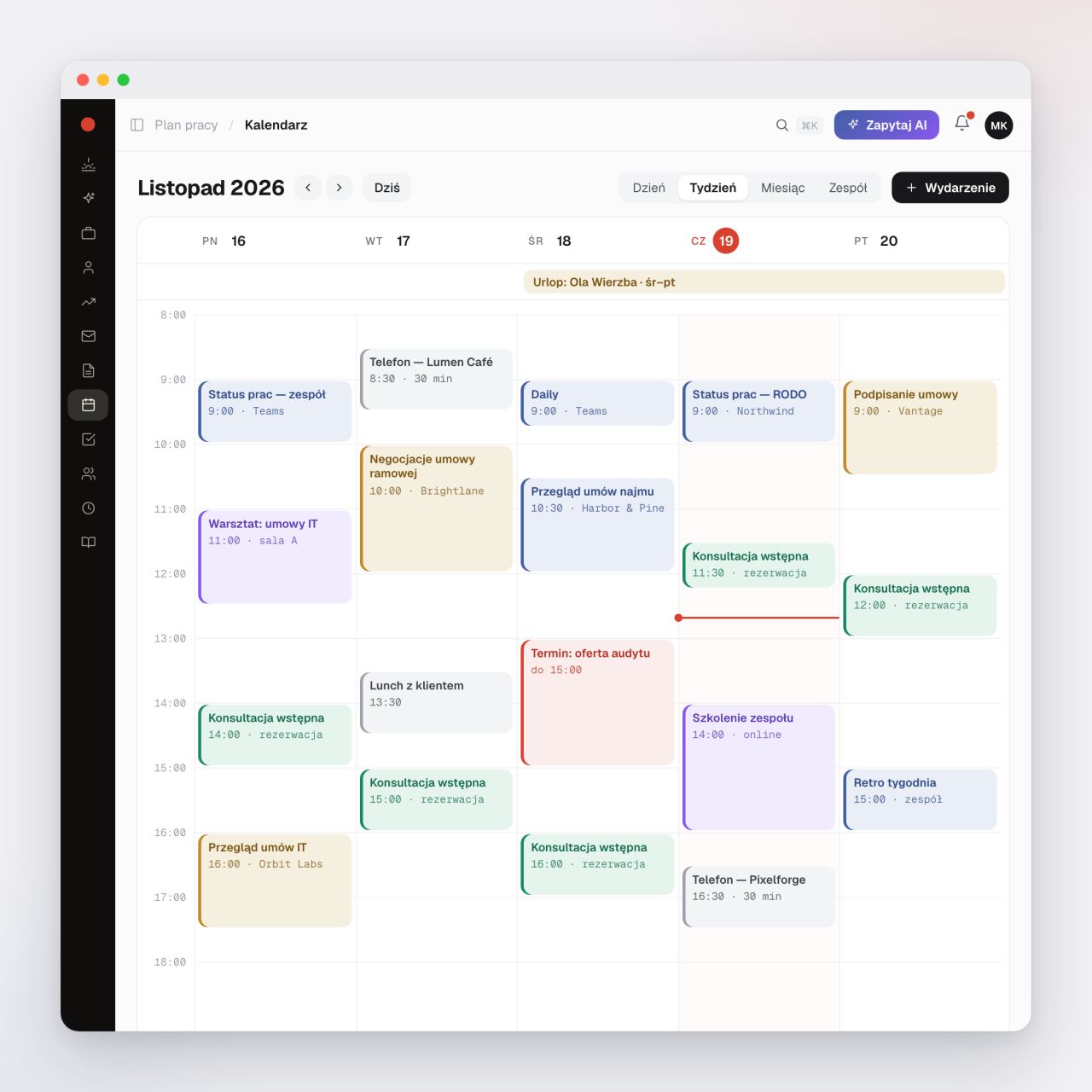
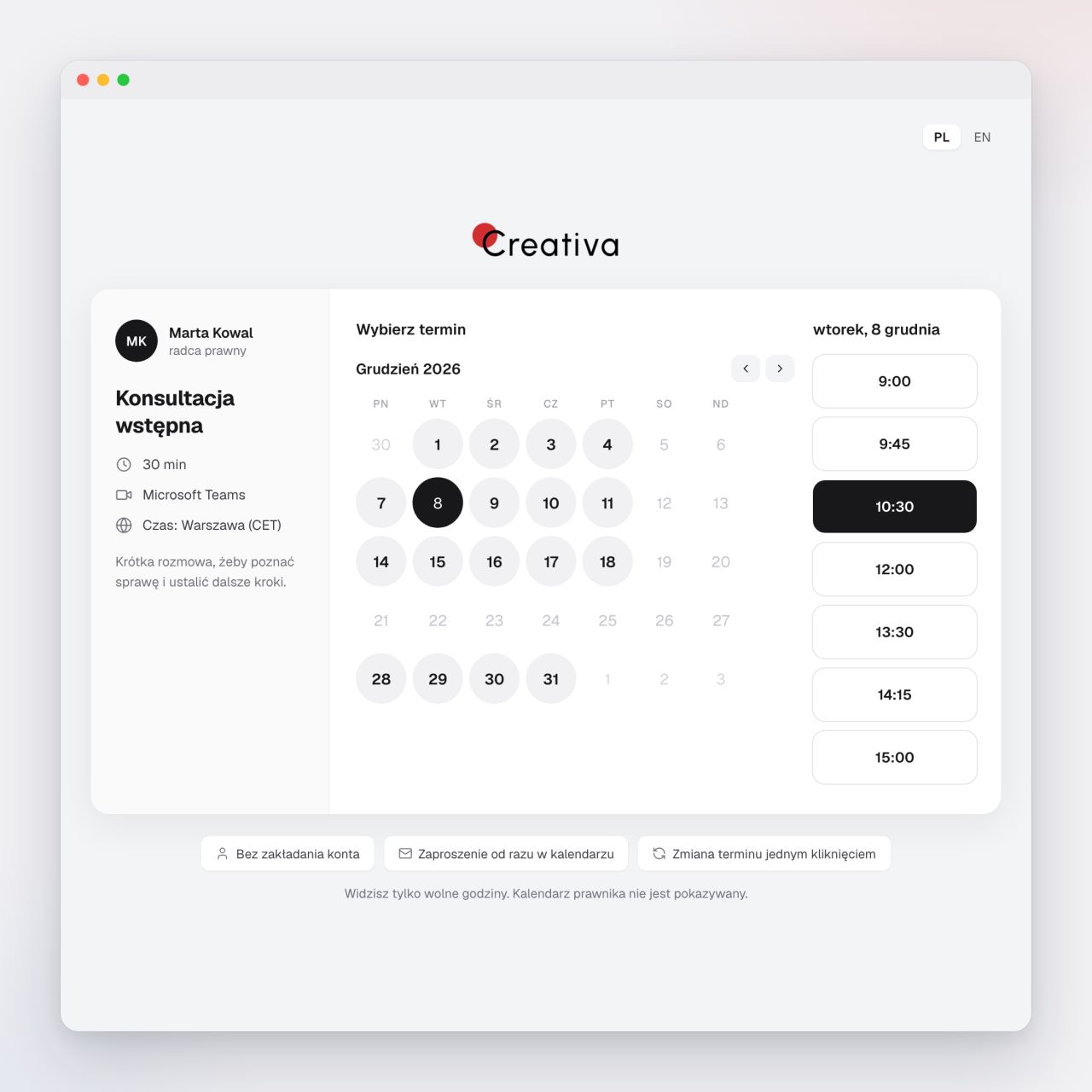
A prospective client can choose a free slot for a 30-minute consultation. The booking appears in the lawyer’s calendar. In the example client file, the appointment also appears as an entry on the timeline, alongside the correspondence that follows.
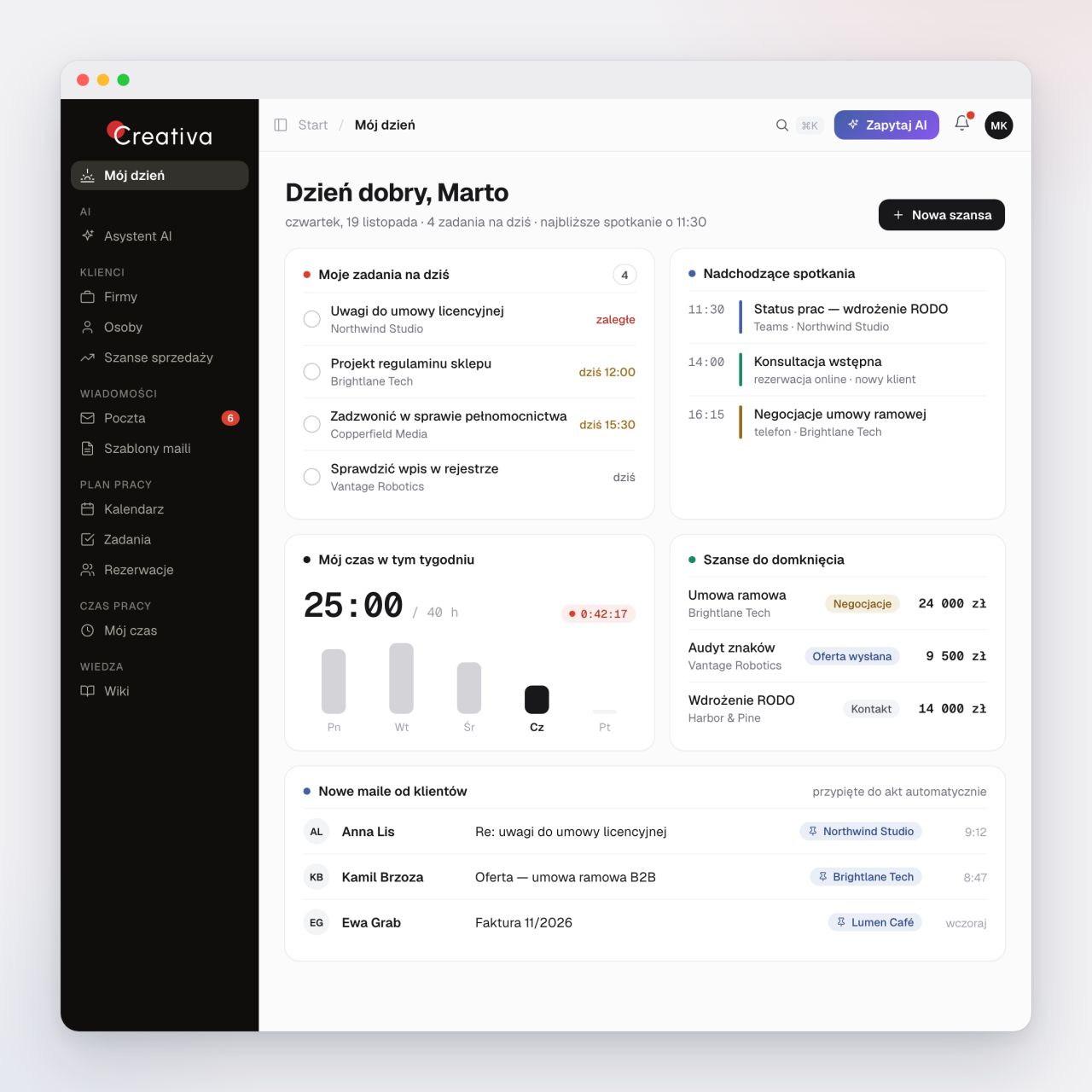
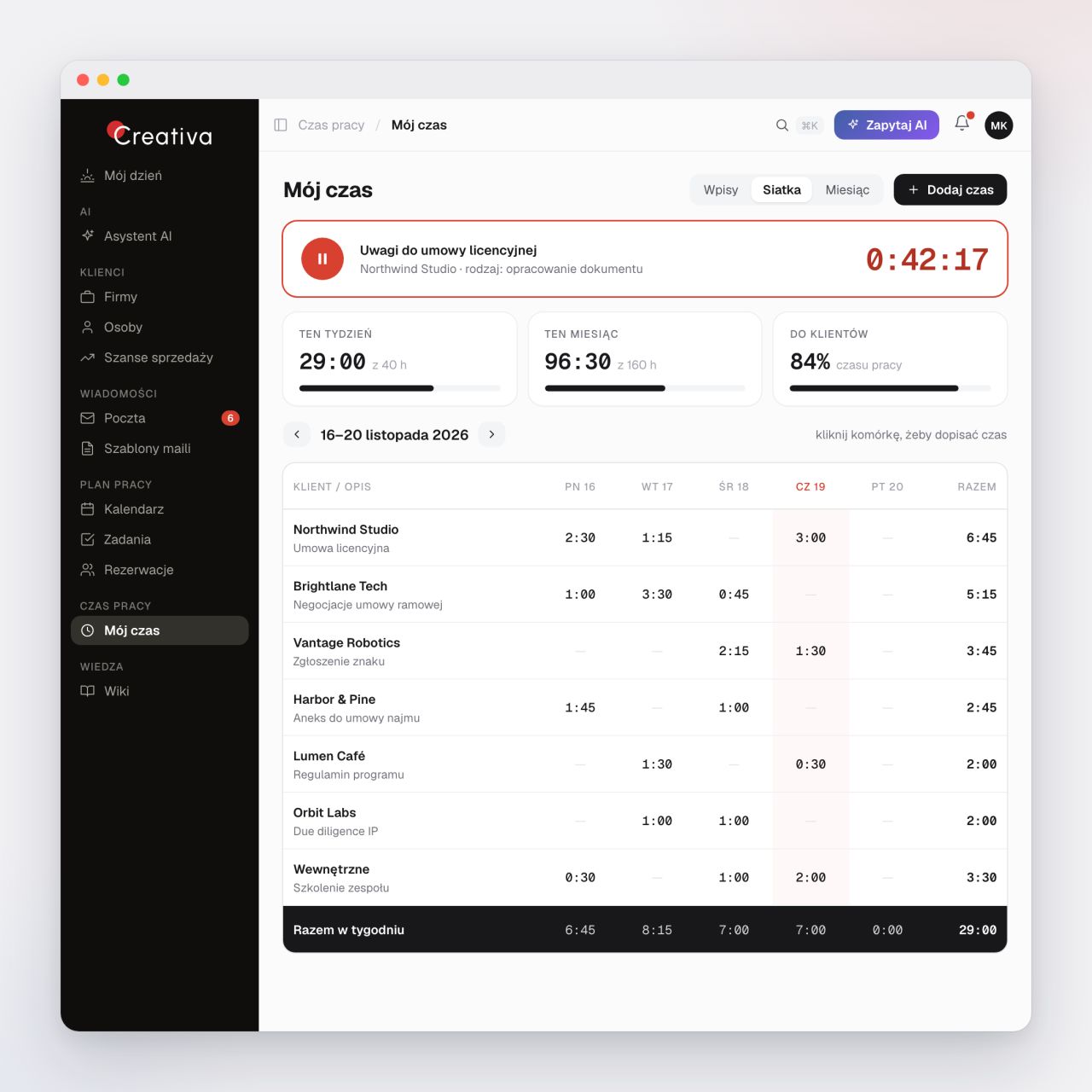
For the lawyer, the day starts with deadlines, meetings and new mail. An email shows which client it belongs to. On the time screen, the lawyer can run a timer against work as specific as reviewing a licensing agreement, then see that entry in the client’s row for the week.
What Creativa built on Open Mercato
By Creativa’s own count, the team can see 302 features. The firm estimates that 4% use Open Mercato as supplied, 23% adapt an existing feature, and 73% were built from scratch. Those figures describe what the team sees on screen. The custom features run on the Open Mercato core too.
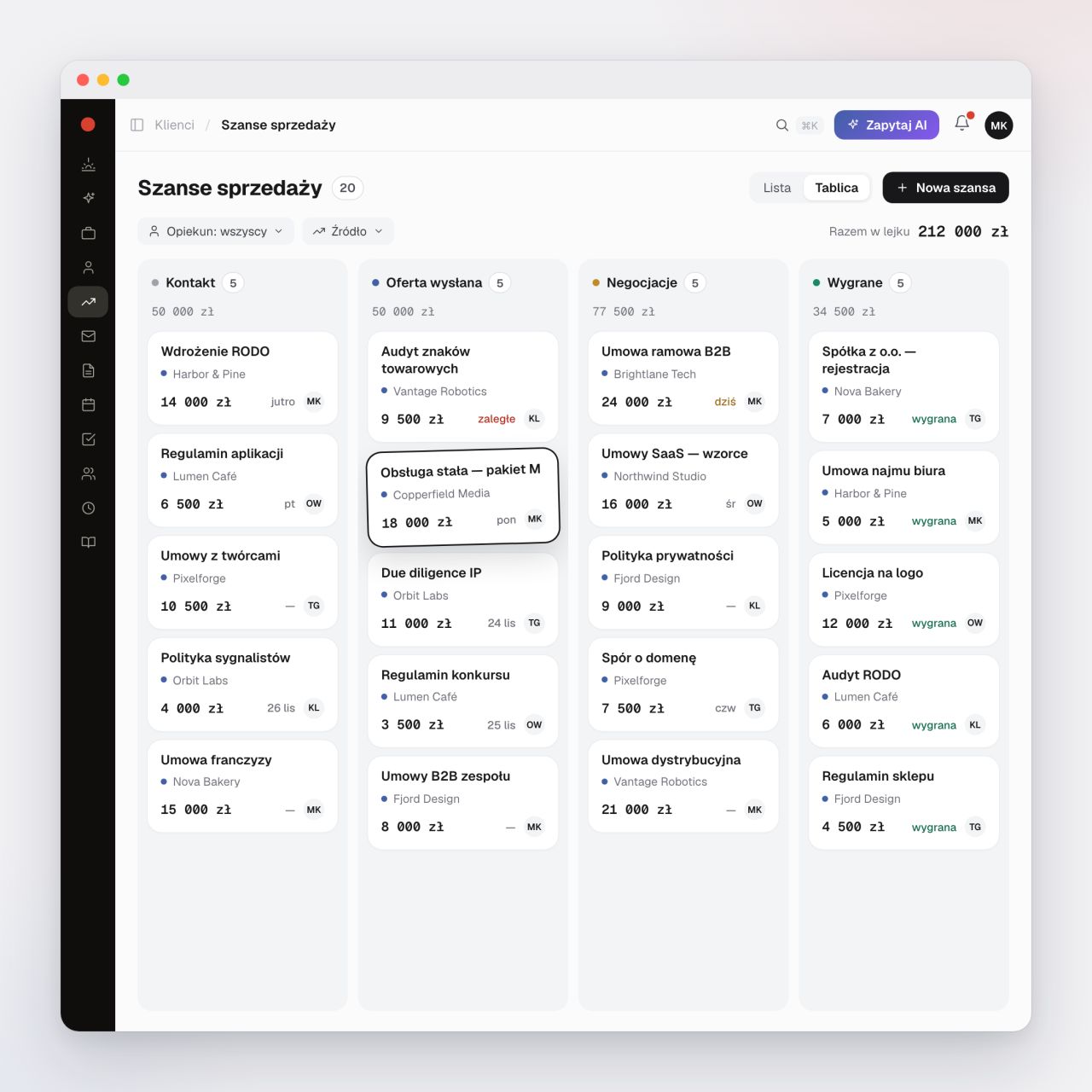
One reason for building so much in-house is how the firm assigns work. Creativa already matches new clients to lawyers by industry. Its sales tools can only draw on what someone put in Pipedrive. The firm wants whoever makes the next assignment to have the history of the work as well.
What the lawyer sees before anything goes to a client
A client can bring in a contract draft from a chat tool. The harder question is whether that draft fits what the parties agreed last time. Creativa is designing its assistant to read the same client file, notes and tasks a lawyer would consult. The assistant sends nothing to the client. A lawyer reviews each result.
At the time of writing, Creativa plans to roll out the workspace by the end of 2026. Invoicing is a later addition. The test the team cares about is a handover: can the next lawyer explain a decision to the client without first tracking down the person who made it?
- Open Mercato core
- Custom client timeline
- AI-assisted development