The owner did the paperwork on Sundays
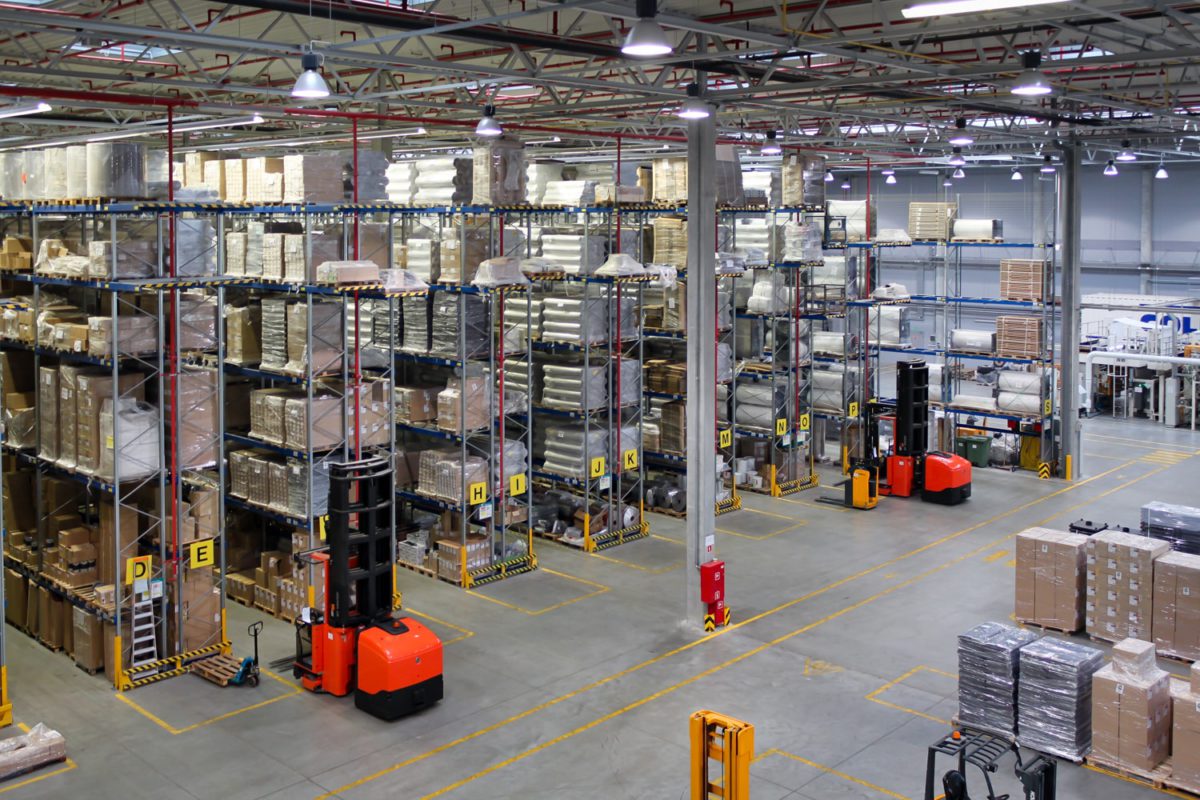
OPAK KREFT makes corrugated packaging to order near Gdańsk. To prepare a customer datasheet, someone had to reconcile board compositions in a spreadsheet, material parameters in supplier price lists and a blank drawing in a separate program. The owner knew how the pieces fitted together. The office needed a way to issue the same document during the working week.
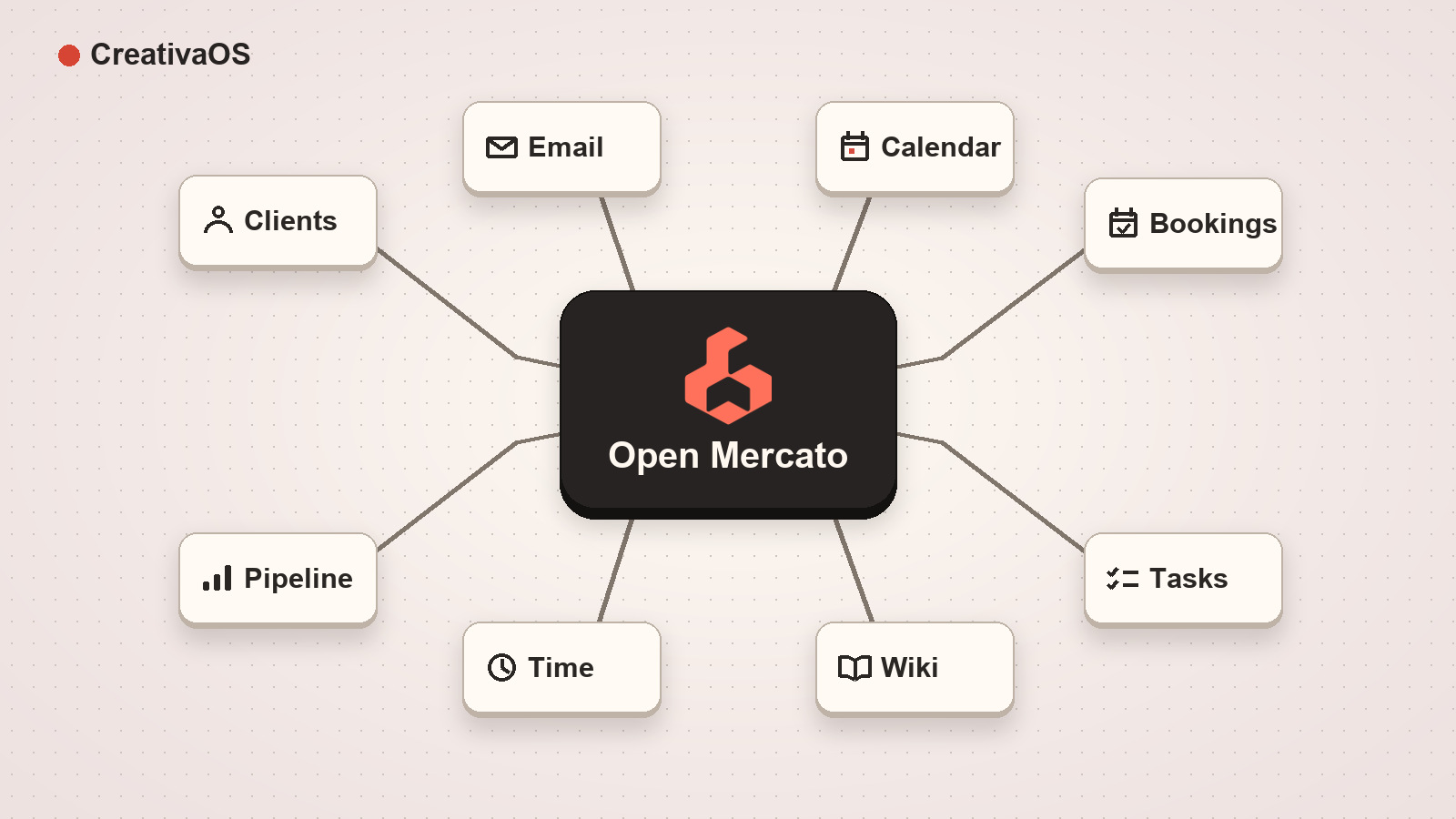
Flowbiz kept invoicing in the existing ERP and built three modules on Open Mercato: a material database, a dictionary of packaging constructions and a document generator. The office could start with one customer and one machine while the factory kept taking orders.
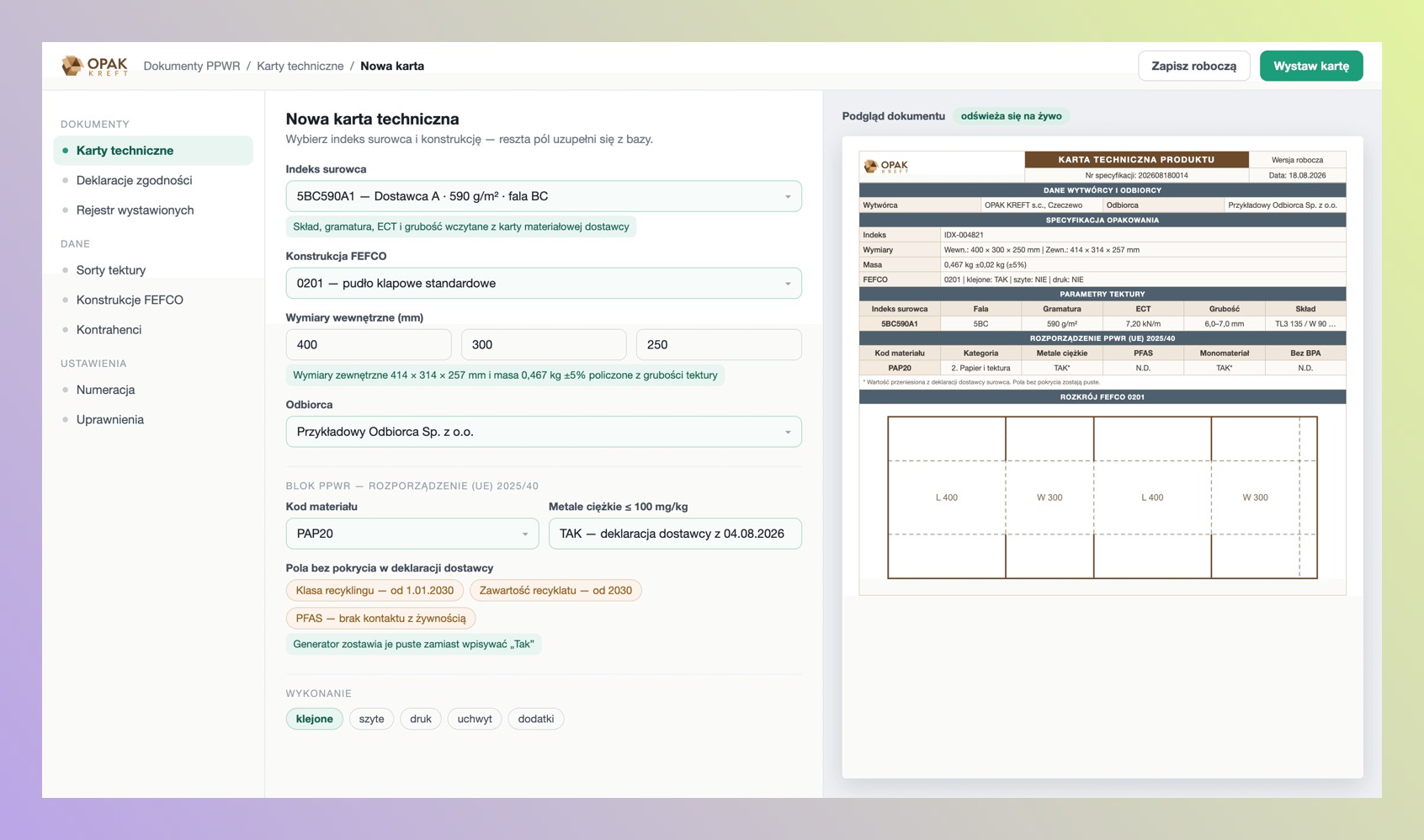
Choose the board and the construction
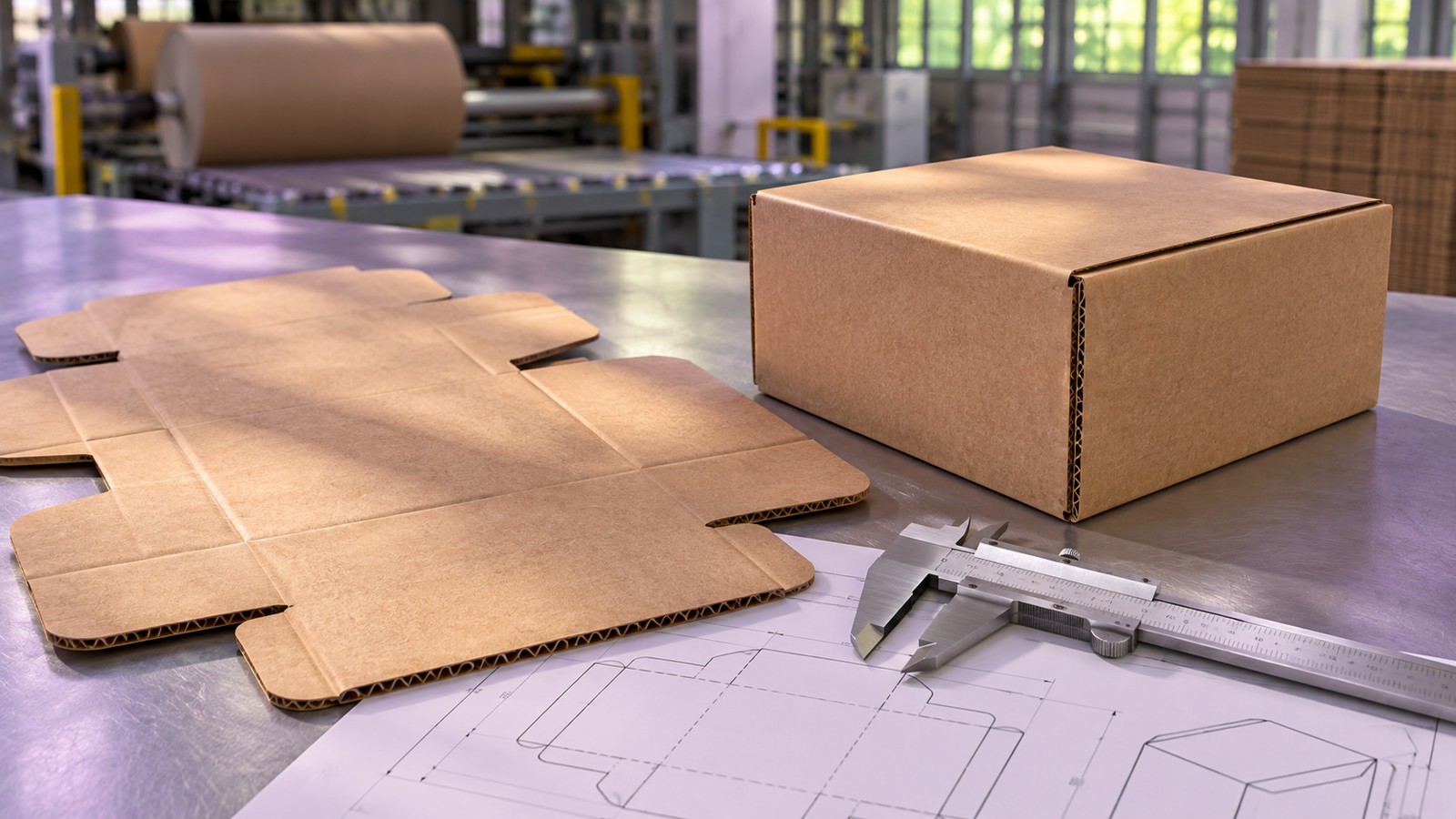
In the editor, the operator selects a material index and a construction. Board properties fill in beside a live preview. The customer needs the internal dimensions to check whether the goods fit. Logistics needs the external dimensions to plan the shipment. Both come from the same geometry, which also produces the blank drawing and its area.
The manufacturer has around 3,000 items in its system. Many share a construction and board grade. For a given customer, the office can group those datasheets under one declaration. Its number appears beside the relevant line on the sales document, giving the customer a reference when a delivery arrives.
What happens when the supplier changes the board?
Suppose a customer asks for the datasheet that shipped in March. If the supplier has since changed the board weight, rerunning the generator would produce a different document. At issue time the system therefore saves the rendered PDF and its checksum. A correction gets a new number. The office can still retrieve exactly what the customer received.
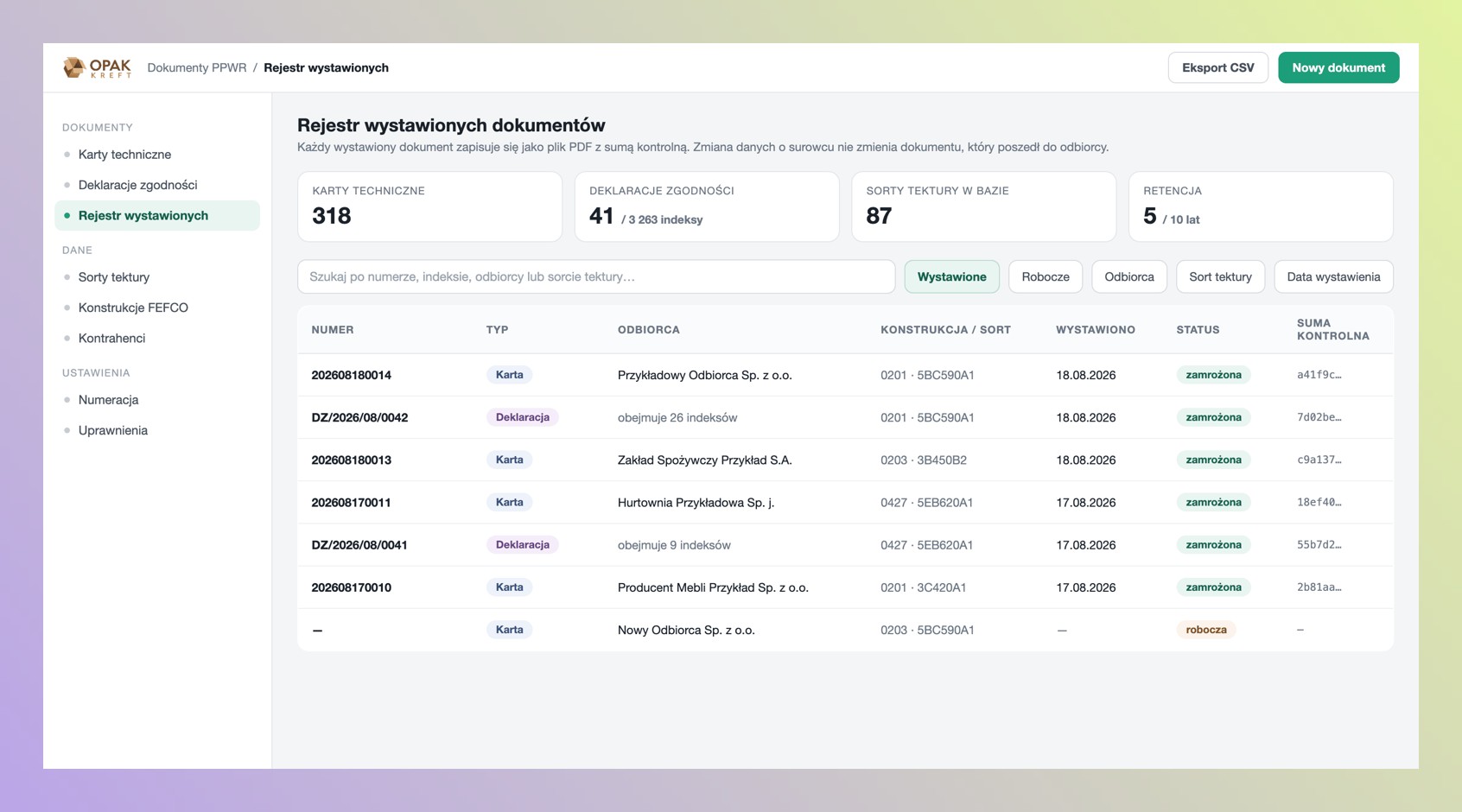
Flowbiz tested that behaviour by changing a material's grammage and checking the issued file. Its bytes stayed the same. The generator also distinguishes supplier-backed values from manufacturer assumptions. A missing value stays blank or gets flagged for confirmation. An adopted default gets a footnote.
The manufacturer remains responsible for its declarations. What changed for the office is the work it can show: which material and construction it used, which values still needed confirmation, and which PDF it sent.
- Open Mercato
- Material and FEFCO construction dictionaries
- SVG blank drawings and Chromium PDF rendering