What do two bottles cost to sell?
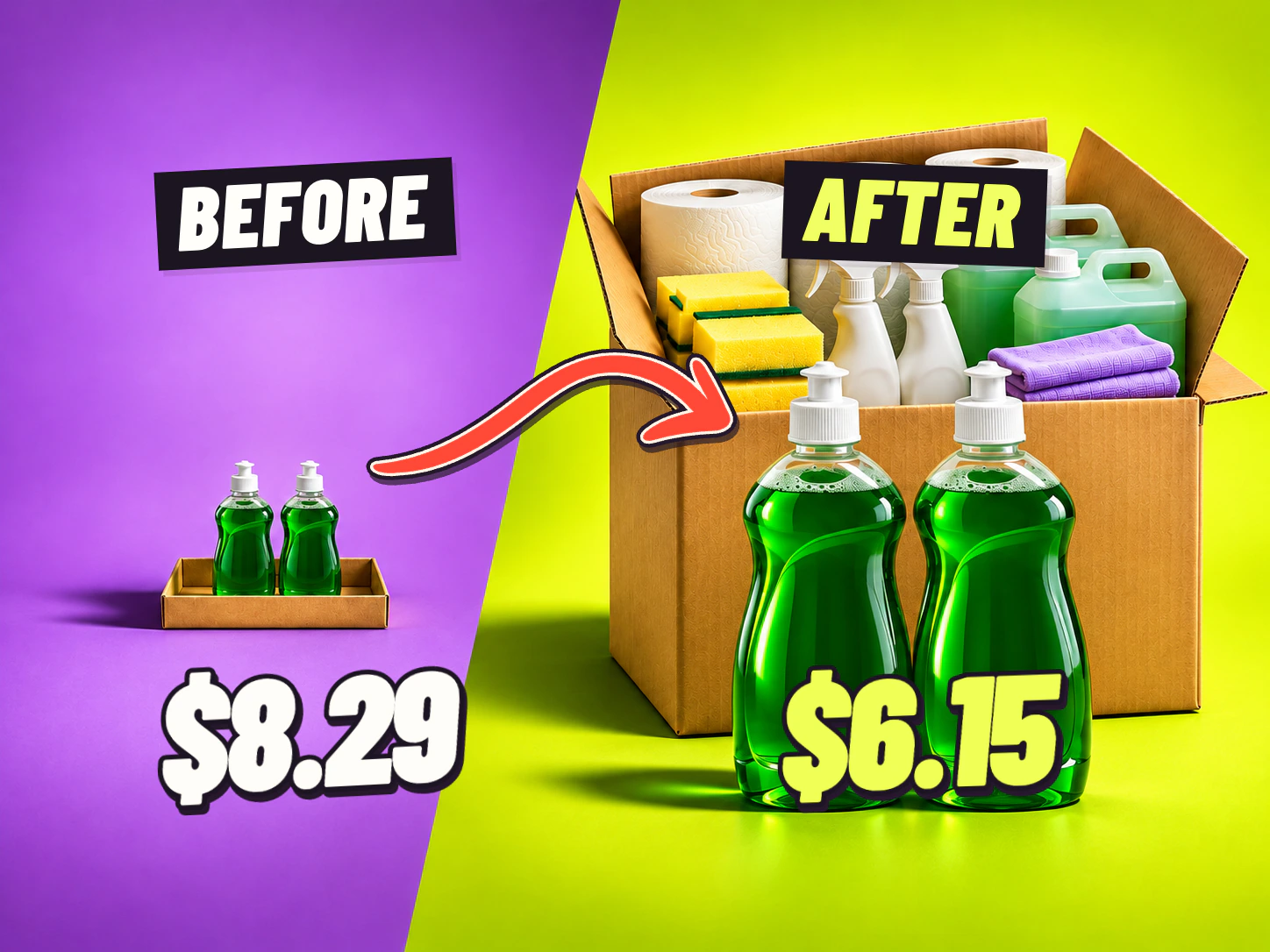
Two bottles of dishwashing liquid fit in the corner of a carton. Order them on their own and someone still takes the order, picks the bottles, packs them, issues the paperwork and gets them to the customer. Add them to a delivery with eleven other product lines and much of that work is already paid for.
Skalo priced both baskets using a wholesale distributor’s data. On their own, the two bottles cost the distributor $8.29 to sell. In a 12-line order, the cost allocated to the same pair was $6.15. Sharing the order costs across twelve product lines cut the cost for the pair by nearly 26% before the rep offered a discount.
The invoice report had one red flag
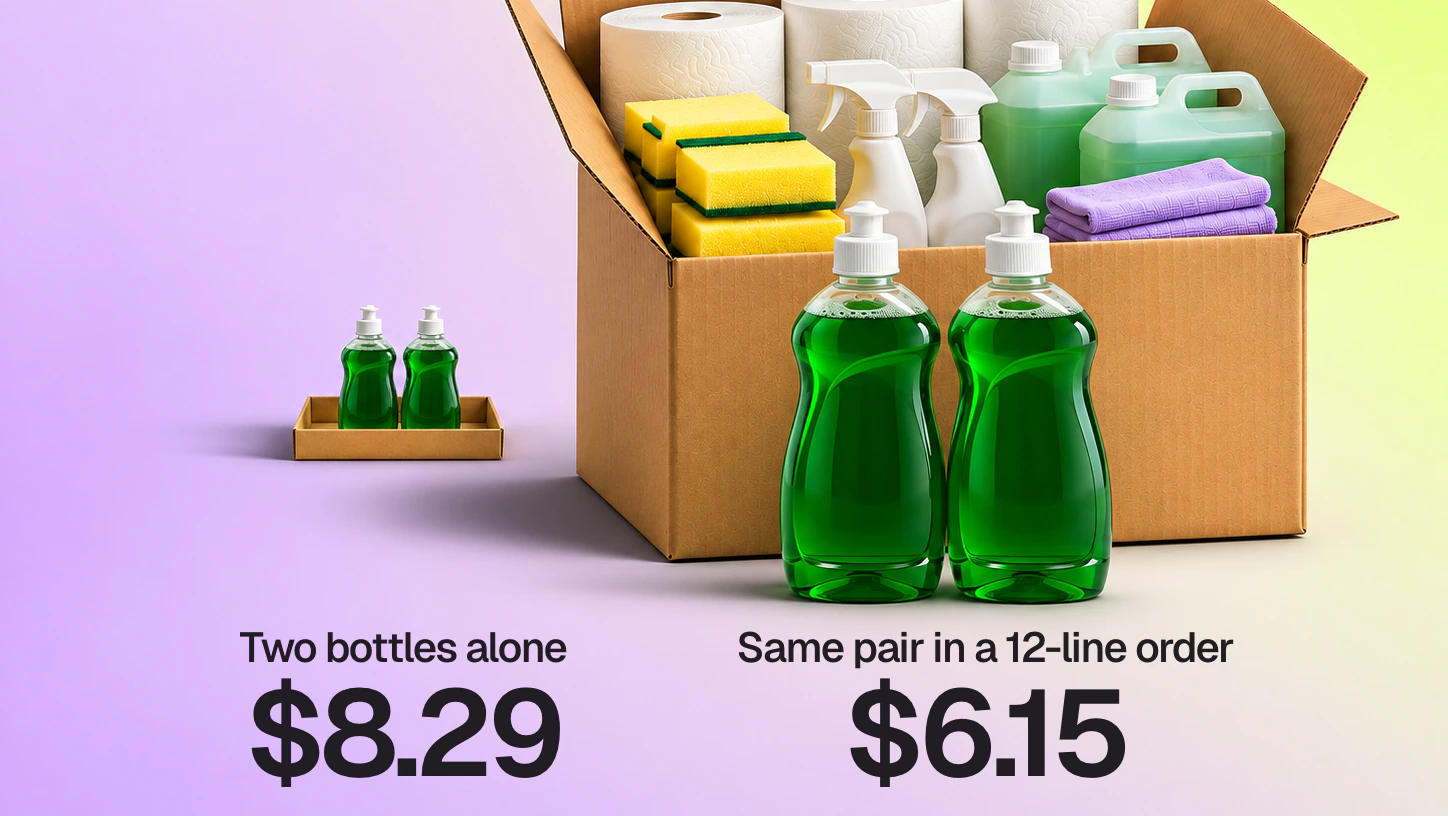
The distributor’s ERP already knew what it paid its suppliers and what it charged its customers. Using those two figures, it flagged one loss-making invoice in a set of 6,364. Time spent taking orders, warehouse work and the cost of getting goods to the customer sat elsewhere in the business.
Skalo included those costs and ran the numbers again. Now 248 invoices fell below cost, or 3.9% of the set. The smallest orders stood out. In the team’s analysis, four out of five invoices below PLN 100 failed to cover their costs. Almost every invoice above PLN 1,200 covered its costs.
What a rep can offer when the buyer asks for a discount
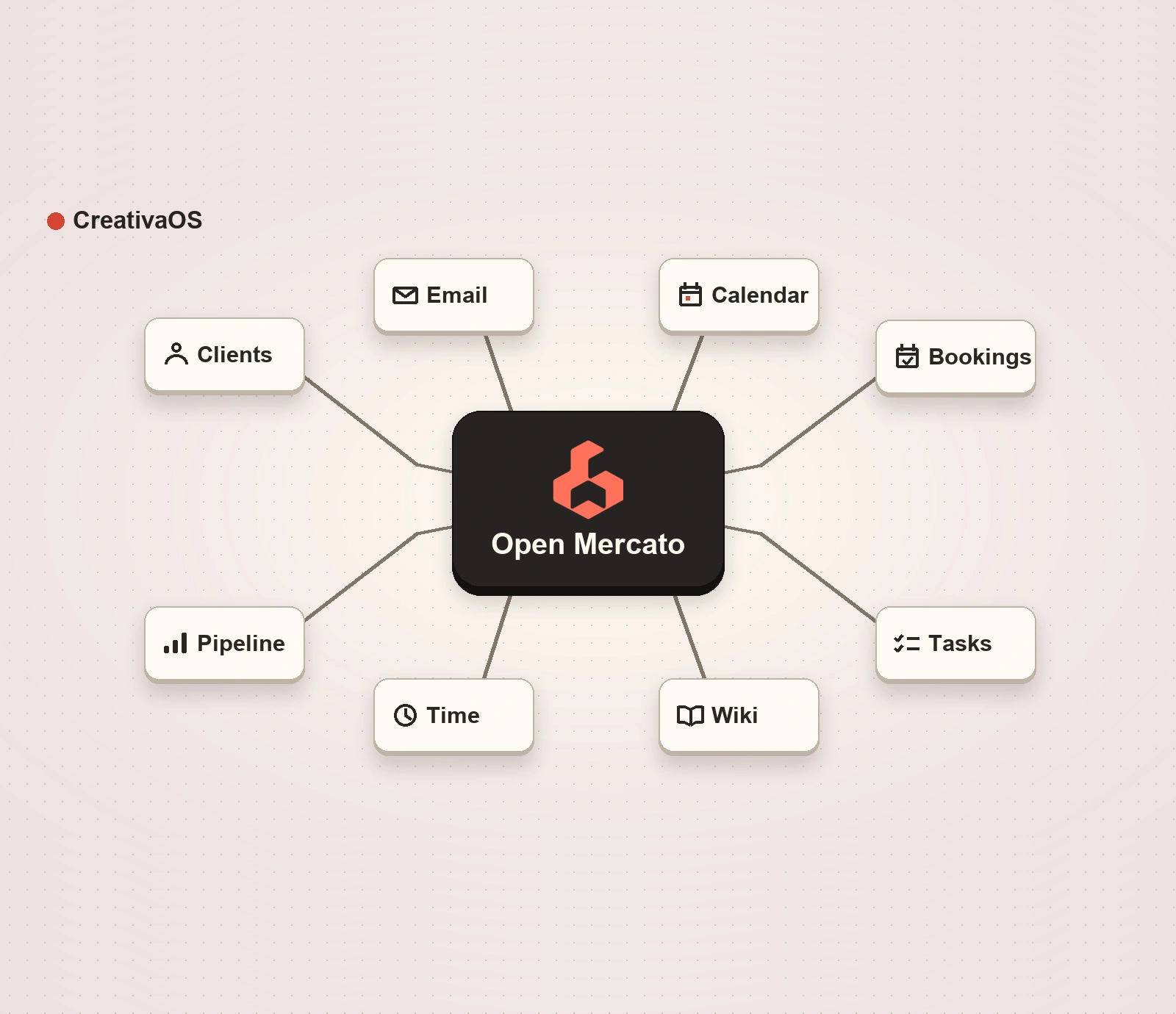
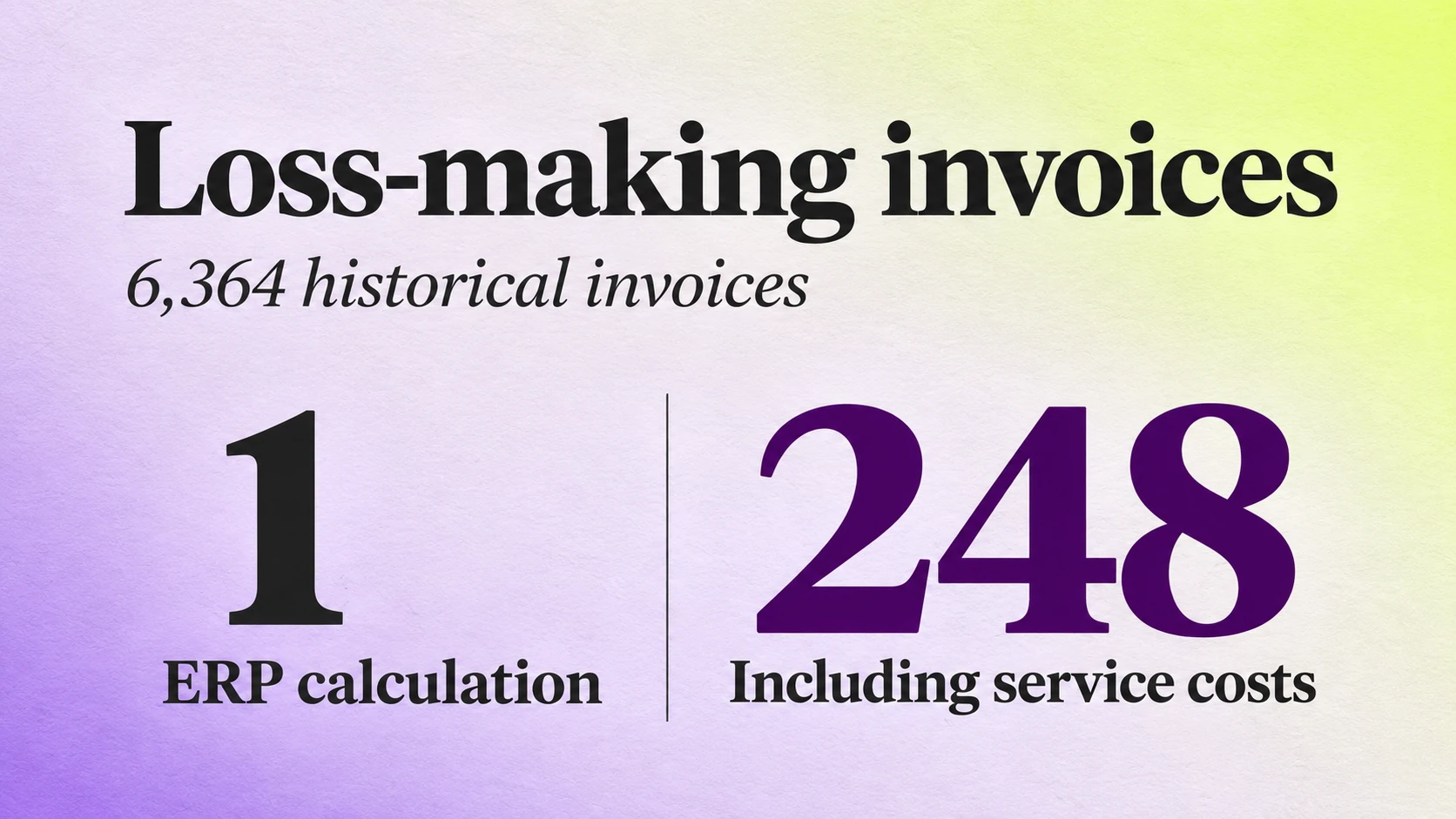
The distributor’s sales team now uses Skalo Pricing Desk on Open Mercato when preparing customer quotes. A rep selects the products and quantities, then sees what the whole order costs to serve. The desk includes picking, packaging, warehouse occupancy and the delivery stop. It also shows when the proposed price falls below the distributor’s margin floor.
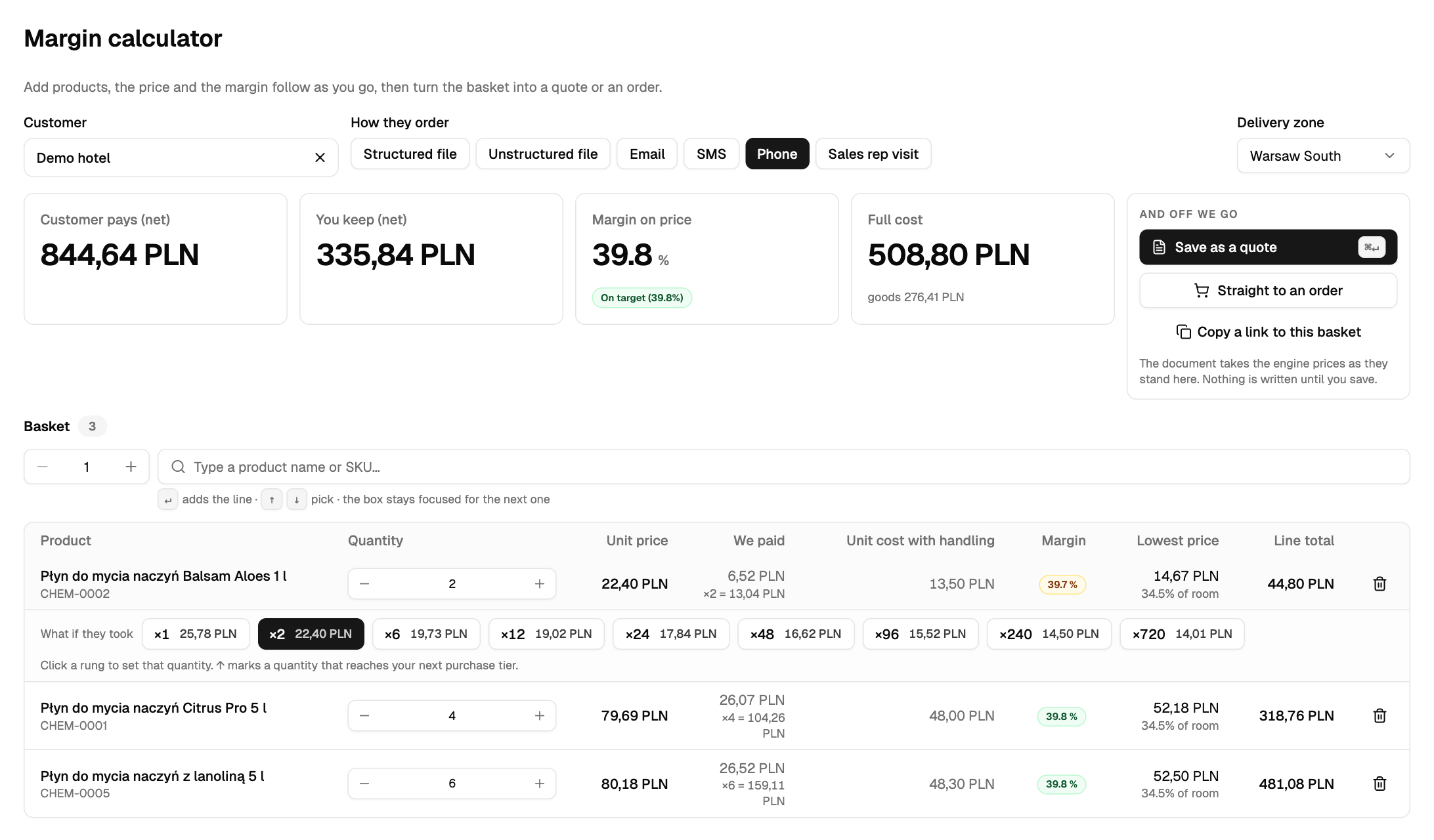
For the two-bottle order, the rep can try adding the pair to a larger delivery and compare the result. For another customer, switching from a phone order to a lower-cost ordering channel might create more room. The desk shows the effect on the buyer’s price and on the distributor’s profit in złoty. The rep chooses which option to offer. The agreed basket can become a sales quote or an order in Open Mercato with its product lines already filled in.
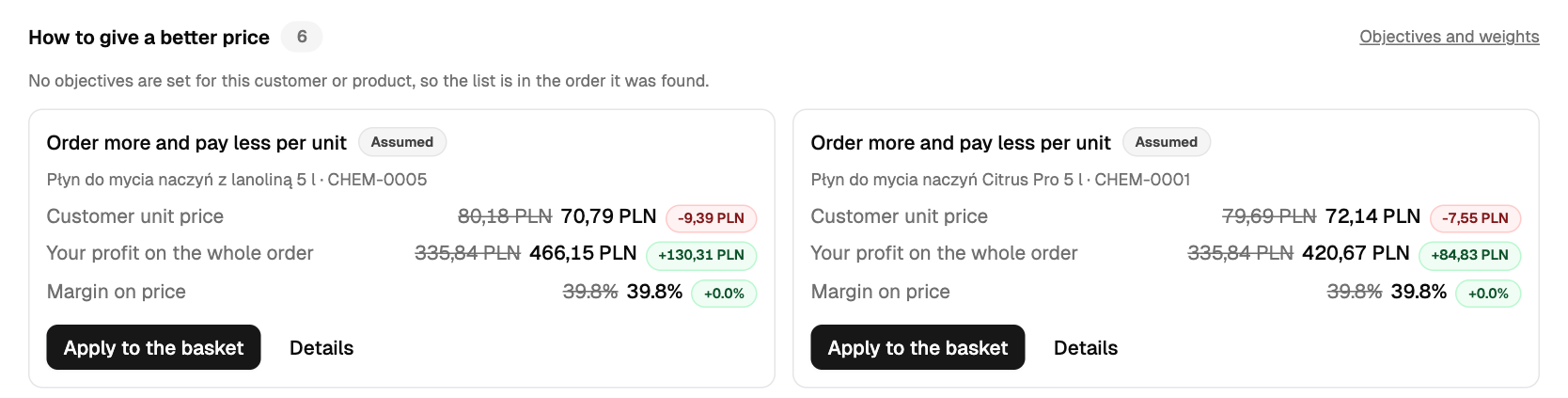
A better price for the buyer can still be a good sale
Skalo tested that proposition on a separate sample of 150 historical orders. Its analysis found that 11.6% of the order lines could have been quoted at a lower price while preserving the same profit in złoty. Those lines represent room the team found in past orders. The comparison keeps the original invoice prices intact.
The calculation stays with the quote. Pricing Desk saves the inputs and the rates it used, so a colleague can reopen the calculation after delivery rates change and explain why the original price made sense. When the next buyer calls about two bottles, the rep has a practical question to ask before giving up any margin. Can they go on the next regular delivery?
Skalo built the pricing engine and distributor workspace for Open Mercato. Explore the project on GitHub.
- Open Mercato pricing engine and distributor workspace
- Product catalogue, customer records, quotes and sales orders
- Basket pricing, margin rules and historical invoice comparisons